
Quick answer: Fifteen pouches per can can support a lower entry price, smaller trial pack or more headspace. Twenty can improve apparent value and reduce packaging cost per pouch, but increases fill, production and working-capital cost. Compare cost per can, cost per pouch, declared servings, fit and target shelf price before choosing.
Side-by-side commercial comparison
| Factor | 15 pouches | 20 pouches |
|---|---|---|
| Entry price | Easier to keep lower | Higher total content may raise shelf price |
| Packaging cost per pouch | Usually higher | Usually lower when the same can is used |
| Trial use | Useful for sampling or a short cycle | Supports repeat-use and value positioning |
| Fit risk | More headspace | Requires careful conditioned-fit validation |
| Cash tied in fill | Lower per can | Higher per can |
Count is not always serving count
If directions define more than one pouch as a serving, pouch count and serving count differ. Label both correctly for the market. Compare formula amount per pouch and per serving; a higher count does not necessarily mean more value when dose or quality changes.
Validate physical fit
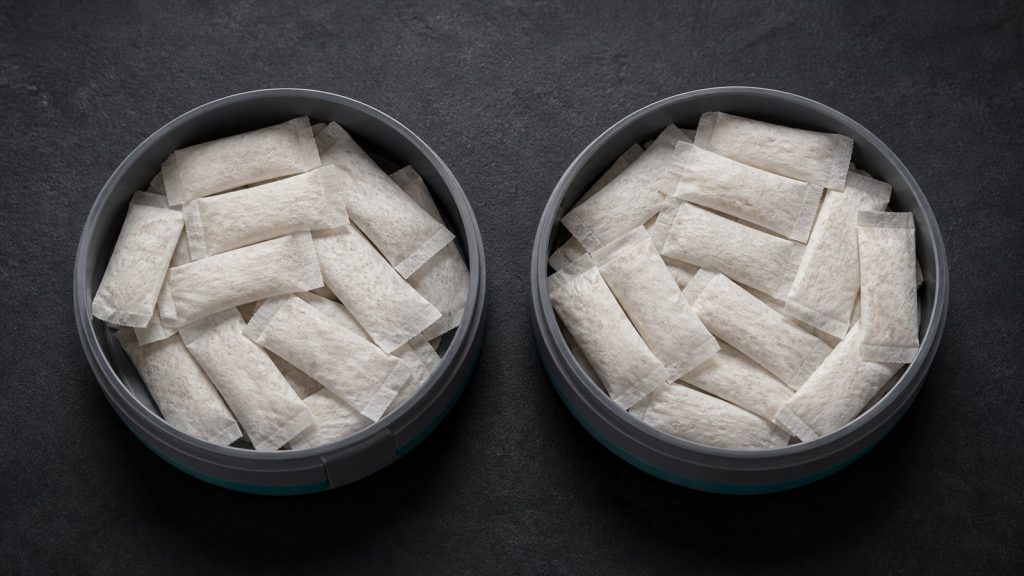
Use production-conditioned pouches, not empty samples. Check closure, seam compression, removal with fingers, swelling, moisture migration and shipping movement. A can that technically holds 20 may create crushed or difficult-to-remove pouches.
Compare cost per pouch and gross margin
Calculate landed cost per can, then divide by accepted pouch count. Model retailer and distributor margins at the intended shelf price. Twenty-count economics can improve packaging efficiency, but an unaffordable shelf price may reduce velocity.
Case-pack consequences
More fill increases case and pallet weight. Confirm tins per inner, inners per master case and freight cube. Barcode, declared count, net quantity and carton artwork must remain consistent across every layer.
Frequently asked questions
Is 20 pouches per can always better value?
Not automatically. Compare active dose, landed cost per pouch, freshness, shelf price and use pattern.
Can the same can hold 15 and 20?
Possibly, but both configurations require fit, closure and stability validation.
Which count is better for a new brand?
Choose from channel research, target price, trial strategy and repeat-use economics rather than copying a competitor.
Buyer due-diligence checklist
- Define the destination market, product classification and intended adult customer.
- Approve written finished-product and packaging specifications.
- Request lot traceability, relevant test methods, change control and complaint procedures.
- Compare landed cost and reorder risk, not a headline unit price alone.
Continue with our 2026 nootropic pouch buyer’s guide, wholesale supplier checklist or OEM project inquiry.
Reviewed 15 August 2026. Educational B2B information, not medical or legal advice. Product classification and requirements vary by market.
Buyer decision summary
Use this page as a decision framework, not as a substitute for a signed product specification or market-specific review. A credible nootropic pouch project identifies the finished product category, the amount of every active per pouch, total caffeine from all sources, intended adult use, packaging configuration and target jurisdiction. Commercial figures such as MOQ and lead time should be tied to the actual formula, flavor, strength and artwork version. Before approval, compare a production-equivalent sample with measurable acceptance criteria and assign responsibility for claims, labels, release testing and later changes. This prevents a general marketing statement from being mistaken for a guaranteed specification and gives procurement, formulation, quality and regulatory teams the same reference point.
Key parameters to confirm
- Commercial unit: Request MOQ per formula, flavor, strength and packaging version.
- Sample status: Separate stock, bench, pilot and production-equivalent approval samples.
- Lead-time trigger: Confirm whether timing starts after deposit, formula approval, artwork approval or packaging receipt.
- Release documents: Define specifications, COA scope, retain samples, change control and acceptance in writing.
Content status: Reviewed 13 September 2026. General B2B information; project-specific commercial, technical and regulatory details require written confirmation.