
Quick answer: A useful nootropic pouch sample RFQ tells the OEM manufacturer the destination market, product position, nicotine-free requirement, active-ingredient direction, strength per pouch, caffeine from every source, flavor, pouch format, can specification, test expectations, forecast and launch timing. It also asks the supplier to identify assumptions, exclusions and documents before producing a sample.
Why a written sample RFQ saves time
“Please make a strong focus pouch in mint” leaves almost every commercial variable open. One supplier may use caffeine only; another may add L-theanine and a choline source. Fill weight, moisture, pouch size, sweetness, can count and warning language may also differ. Samples cannot be compared fairly when each factory solves a different brief.
A concise request for quotation converts an idea into measurable decisions. It does not need a finished formula, but it should separate mandatory requirements from preferences and questions. This gives the manufacturer a basis for feasibility, sample cost, MOQ, estimated lead time and the documents available for the intended market.
Copyable nootropic pouch sample RFQ template
| RFQ field | Information to provide or request |
|---|---|
| Company and market | Brand status, countries, sales channel, adult positioning and expected launch window |
| Product identity | Nicotine-free, tobacco-free nootropic or functional oral pouch; intended category wording subject to review |
| Formula direction | Requested actives, target amount per pouch, ingredient grade or trademark, and ingredients to exclude |
| Caffeine declaration | Total caffeine per pouch from purified caffeine, guarana, tea, coffee or other sources |
| Pouch specification | Slim or mini dimensions, target fill weight, dry or semi-moist style, fabric and intended use period |
| Flavor | Two or three clear directions, sweetness, cooling level, color restrictions and reference products |
| Packaging | Count per low-profile round can, lid features, liner, label or direct print, master-case and barcode needs |
| Testing | Identity, assay, uniformity, microbiology, moisture, seams, stability and any target-market document questions |
| Commercials | Sample fee, revisions, MOQ per SKU, price breaks, tooling, artwork cost, production and shipping lead time |
Formula questions to settle before sampling
State whether caffeine is central, optional or excluded. “Natural energy” is not a dose specification: guarana and tea extracts contribute caffeine and must be counted. For L-theanine, Alpha-GPC, citicoline, L-tyrosine, rhodiola or lion’s mane, identify the requested grade and amount where known. The factory should flag mass, solubility, taste, stability or regulatory constraints instead of silently reducing a target.
Ask for a per-pouch formula table for the sample and confirmation that the commercial version will use the approved grades or documented equivalents. Avoid requests to treat ADHD, increase IQ or guarantee cognitive performance. Permitted structure/function or general-wellness wording depends on the target market and evidence.
Specify a realistic pouch and can
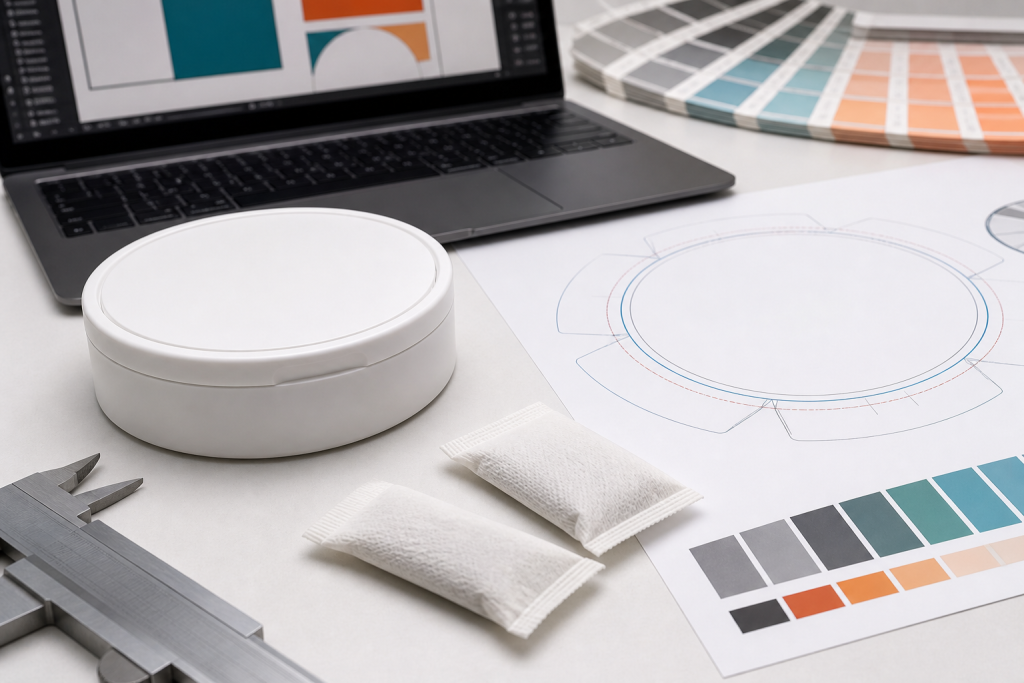
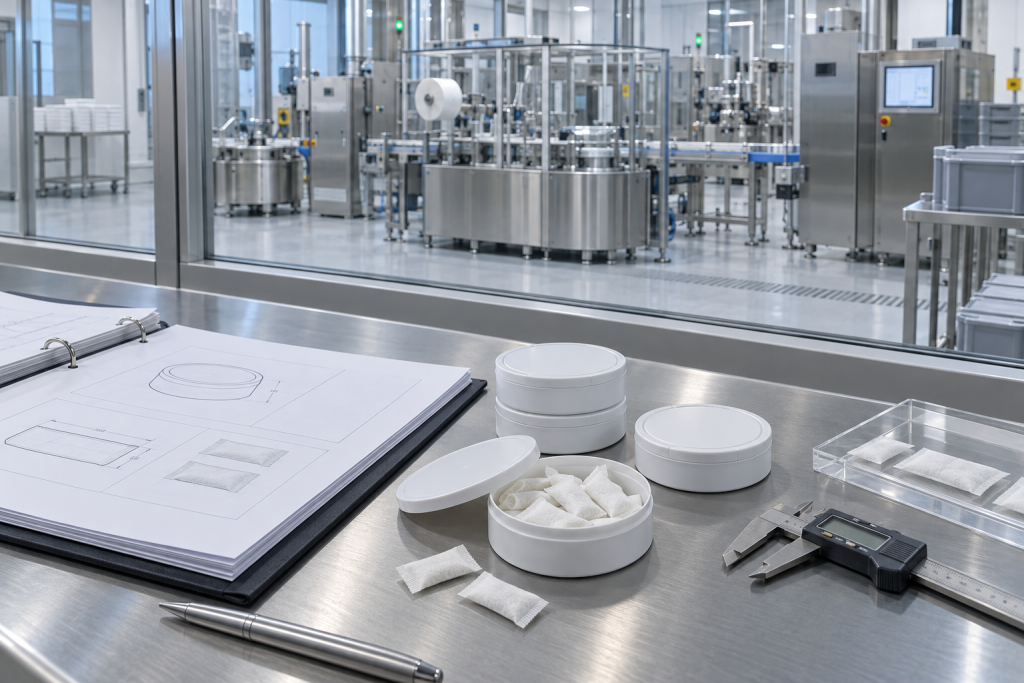
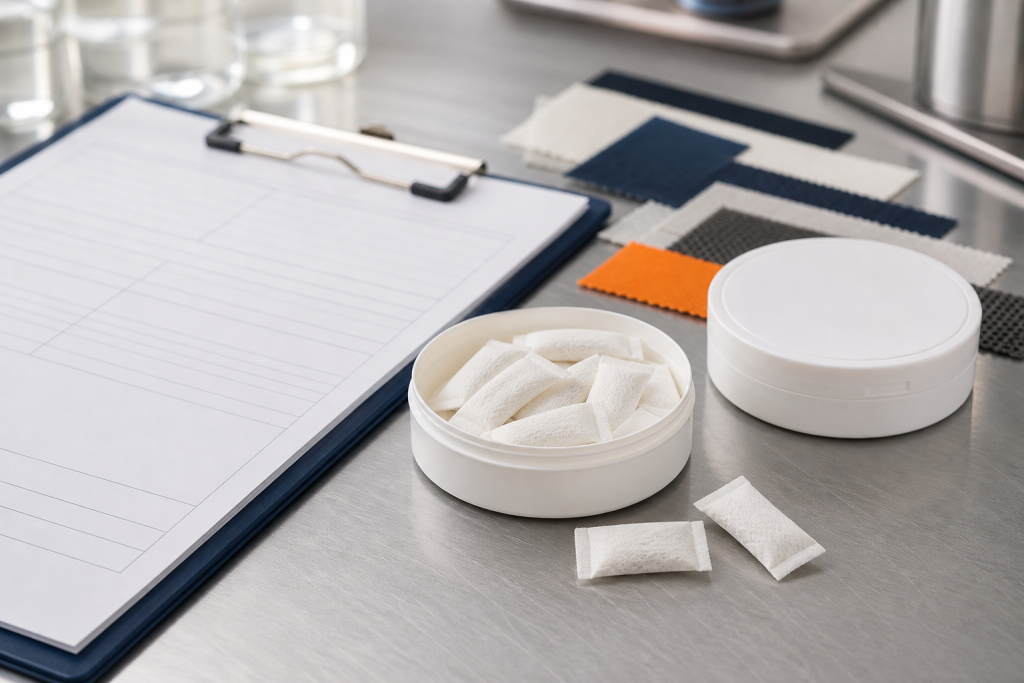
Modern oral pouches are small heat-sealed nonwoven sachets with a controlled fill bulge—not tea bags or flat paper packets. Define slim or mini dimensions, fabric feel, seam quality and dry versus semi-moist experience. A realistic sample should be supplied in the proposed low-profile round can because headspace, closure, liner and flavor migration affect the product.
Request the number of pouches per can, can diameter and height, child-safety or disposal-lid expectations where relevant, decoration method and minimum order for each component. Packaging MOQ can be higher than the formula MOQ, so ask how excess cans or labels are handled.
How to compare sample quotations
- Normalize the scope: compare the same active amounts, count, can type, testing and freight basis.
- Separate one-time costs: artwork, tooling, plates and development should not be hidden inside unit price.
- Confirm sample-to-batch transfer: ask what changes at production scale and whether a pilot run is required.
- Request concrete documents: specifications, COA example, allergen statement, traceability and stability plan should match the project.
- Record approval criteria: score opening flavor, bitterness, cooling, texture, leakage, loose powder and finish at defined times.
Common RFQ mistakes
Sending only competitor photographs encourages packaging imitation without defining the product. Asking for “FDA approved” is also imprecise: facilities, ingredients, claims and labels have different regulatory concepts, and a manufacturer should explain what registration or documentation actually applies. Finally, a low MOQ is not valuable if the selected printed can requires a much larger packaging commitment.
Frequently asked questions
How many sample versions should a brand request?
Start with a small decision set—often two formula or strength directions and two or three flavors. Too many simultaneous variables make feedback unreliable.
Should a nootropic pouch sample be free?
Stock samples may be free or credited later, while custom formula, flavor and packaging work often carries a development charge. Ask what the fee includes and whether revisions or shipping are separate.
What is a good MOQ for private-label nootropic pouches?
MOQ depends on formula, ingredient lots, flavor, pouch material, printed packaging and production setup. Request separate figures for stock white label, modified formula and fully custom OEM rather than relying on one headline number.
Can the first lab sample be used for shelf-life approval?
Not automatically. Stability should use representative finished product in the final packaging and process. A hand-made lab sample is mainly for direction and feasibility.
Related OEM resources
See our sample-request guide, wholesale buyer checklist and OEM project inquiry page.
Reviewed 27 August 2026. General B2B educational information; market-specific regulatory review is required.
Buyer decision summary
Use this page as a decision framework, not as a substitute for a signed product specification or market-specific review. A credible nootropic pouch project identifies the finished product category, the amount of every active per pouch, total caffeine from all sources, intended adult use, packaging configuration and target jurisdiction. Commercial figures such as MOQ and lead time should be tied to the actual formula, flavor, strength and artwork version. Before approval, compare a production-equivalent sample with measurable acceptance criteria and assign responsibility for claims, labels, release testing and later changes. This prevents a general marketing statement from being mistaken for a guaranteed specification and gives procurement, formulation, quality and regulatory teams the same reference point.
Key parameters to confirm
- Commercial unit: Request MOQ per formula, flavor, strength and packaging version.
- Sample status: Separate stock, bench, pilot and production-equivalent approval samples.
- Lead-time trigger: Confirm whether timing starts after deposit, formula approval, artwork approval or packaging receipt.
- Release documents: Define specifications, COA scope, retain samples, change control and acceptance in writing.
Content status: Reviewed 13 September 2026. General B2B information; project-specific commercial, technical and regulatory details require written confirmation.