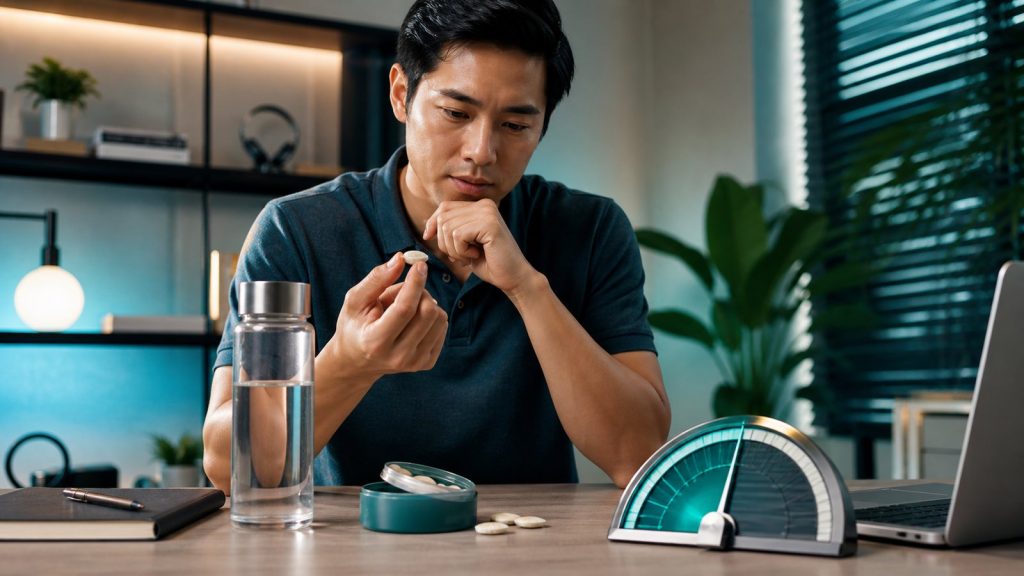

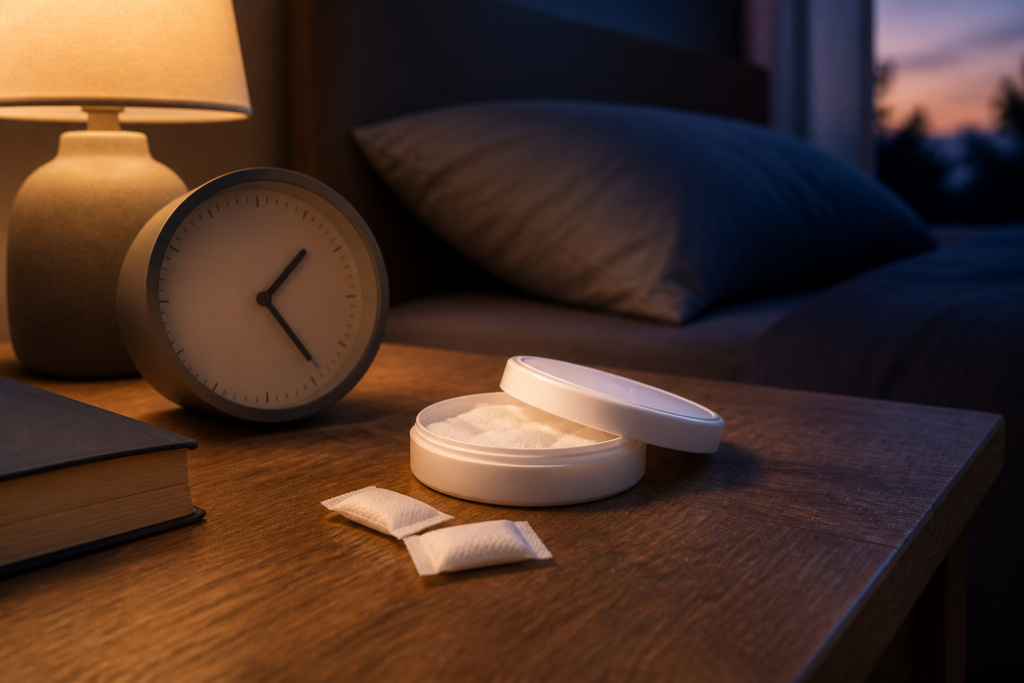
Quick answer: Do not sleep with a nootropic pouch in your mouth. Remove and dispose of it before lying down. Sleep reduces conscious control of the pouch, prolongs contact with one area of gum and creates a risk of accidental swallowing or choking; caffeine-containing formulas may also interfere with sleep.
Why overnight use is different
During normal awake use, a person can notice movement, leakage, burning or nausea and remove the pouch. During sleep, that feedback and control are reduced. A small pouch can shift, tear or be swallowed, and prolonged local contact can worsen irritation.
“Nicotine-free” does not mean suitable for sleeping. Caffeine, paraxanthine, stimulating botanicals or other active ingredients may affect sleep or interact with medications and individual conditions.
Caffeine timing matters
Caffeine persists for hours and individual clearance varies widely. Brands should avoid promising that L-theanine or another ingredient cancels caffeine-related sleep disruption. Consumers should count caffeine from pouches together with coffee, tea, pre-workout and energy drinks.
A caffeine-free formula may remove traditional caffeine but still requires responsible directions. Paraxanthine is not traditional caffeine yet remains a stimulant-like ingredient and should not be positioned as automatically sleep-friendly.
Safer evening practice
Choose products and timing according to the label and personal tolerance. Set a removal reminder if needed, use only while fully awake and discard the pouch before bed. Do not leave open cans on a bedside table accessible to children or pets.
What brands should put on the label
Clear directions should cover placement, maximum use time, removal, disposal, daily serving limits and stimulant warnings. Complaint systems should distinguish sleep disturbance, accidental ingestion, gum irritation and damaged pouches.
Practical checklist
- Remove every pouch before sleeping or napping.
- Avoid late caffeine based on the label and individual sensitivity.
- Never assume caffeine-free means sedating or risk-free.
- Close and store the can securely after use.
- Report damaged pouches and recurring irritation with the lot number.
Frequently asked questions
What if I accidentally fell asleep with a pouch?
Remove it when you wake, check that it is intact and monitor for irritation or other symptoms. Seek professional advice if it was swallowed or symptoms are significant.
Can a caffeine-free nootropic pouch stay in overnight?
No. The movement, swallowing and prolonged-contact concerns remain even without caffeine.
Does L-theanine make a caffeinated pouch suitable before bed?
Not necessarily. It does not guarantee prevention of caffeine-related sleep effects.
Related nootropic pouch resources
Read our usage guide, safety overview, packaging guide and OEM inquiry page.
Reviewed 28 August 2026. General educational and B2B information only; not medical or legal advice.
Buyer decision summary
Use this page as a decision framework, not as a substitute for a signed product specification or market-specific review. A credible nootropic pouch project identifies the finished product category, the amount of every active per pouch, total caffeine from all sources, intended adult use, packaging configuration and target jurisdiction. Commercial figures such as MOQ and lead time should be tied to the actual formula, flavor, strength and artwork version. Before approval, compare a production-equivalent sample with measurable acceptance criteria and assign responsibility for claims, labels, release testing and later changes. This prevents a general marketing statement from being mistaken for a guaranteed specification and gives procurement, formulation, quality and regulatory teams the same reference point.
Key parameters to confirm
- Product identity: State whether the SKU contains nicotine, tobacco or caffeine; these are not interchangeable categories.
- Dose basis: Show every active amount per pouch and per serving, including caffeine from all sources.
- Evidence boundary: Describe intended support without promising treatment, disease prevention or guaranteed results.
- User boundary: Define adult-use guidance, warnings, maximum daily use and conditions requiring professional advice.
Continue this topic
- What Are Nootropic Pouches? A Practical Guide for First-Time Users
- How Do Nootropic Pouches Work? Release, Absorption and Onset Explained
- Are Nootropic Pouches Safe? A Caffeine, Ingredient and Oral-Comfort Checklist
Content status: Reviewed 13 September 2026. General B2B information; project-specific commercial, technical and regulatory details require written confirmation.