
Quick answer: Freeze the formula, pouch count and physical can before final artwork begins. Obtain the packaging supplier’s approved production dieline, place editable artwork on that exact file, verify every ingredient, amount, warning, barcode and market-specific statement, then approve one controlled print proof with a revision number. A beautiful marketing mockup is not a production-ready label.
Why artwork approval is part of quality control
A private label nootropic pouch can has limited printable space, yet it may need to identify the product, net quantity, pouch count, ingredients, amounts, serving directions, caffeine from every source, warnings, storage, lot or date coding and the responsible business. These details must remain legible after a flat design is wrapped around a low-profile round can.
Errors become expensive when they are repeated across thousands of cans. A misplaced barcode can fail at retail, text can disappear under the lid overhang, and a late formula change can leave an old ingredient panel in production. Treat the approved artwork as a controlled manufacturing specification, not merely a design attachment.
Start with the real production can
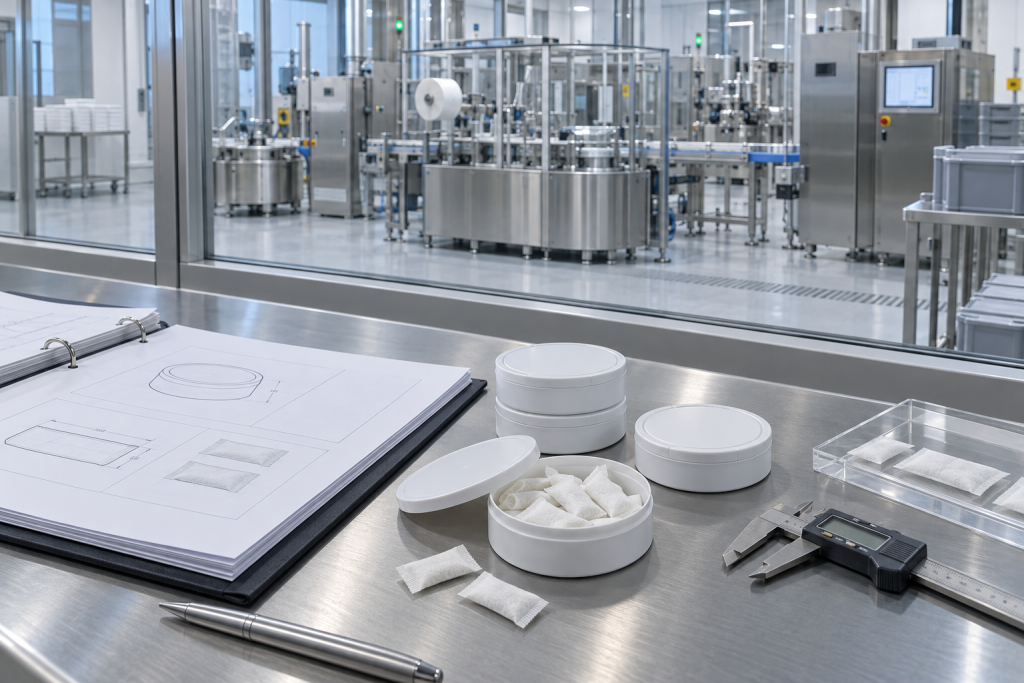
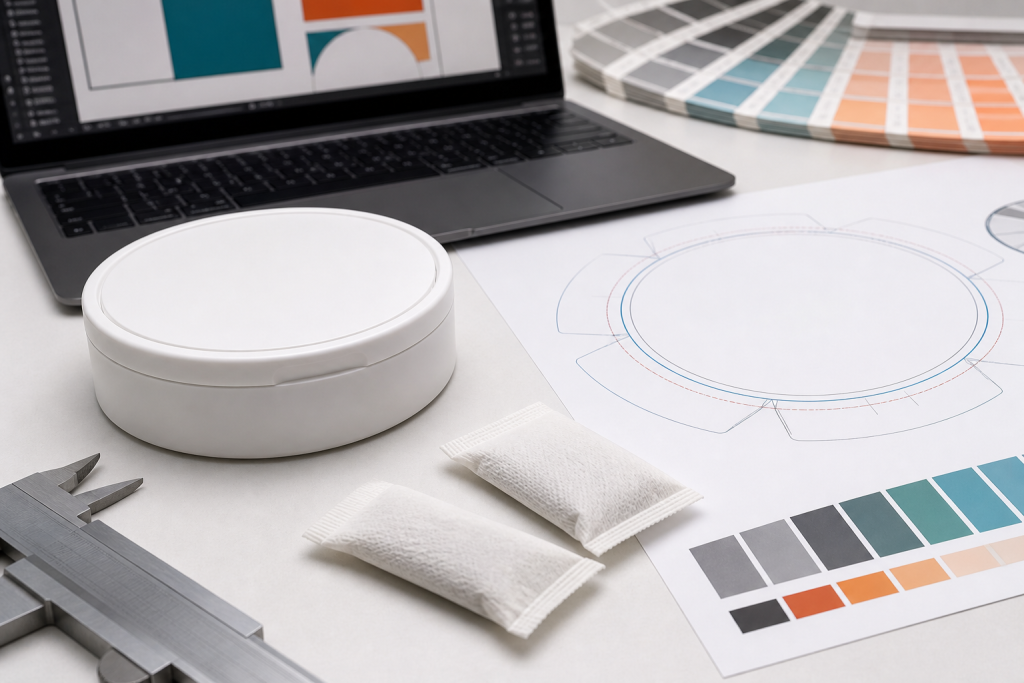
Do not copy a competitor’s label dimensions or draw a circle from an online photograph. Ask the manufacturer for the current production dieline tied to the selected can tool, lid, label material and decoration method. Confirm:
- Can diameter, body height and usable label area
- Lid-top print or label diameter and any recessed panel
- Body wrap length, overlap allowance and application tolerance
- Bleed, trim, safe areas and no-print zones
- Lot code and best-before printing location
- Label, shrink sleeve, in-mold label or direct-print process
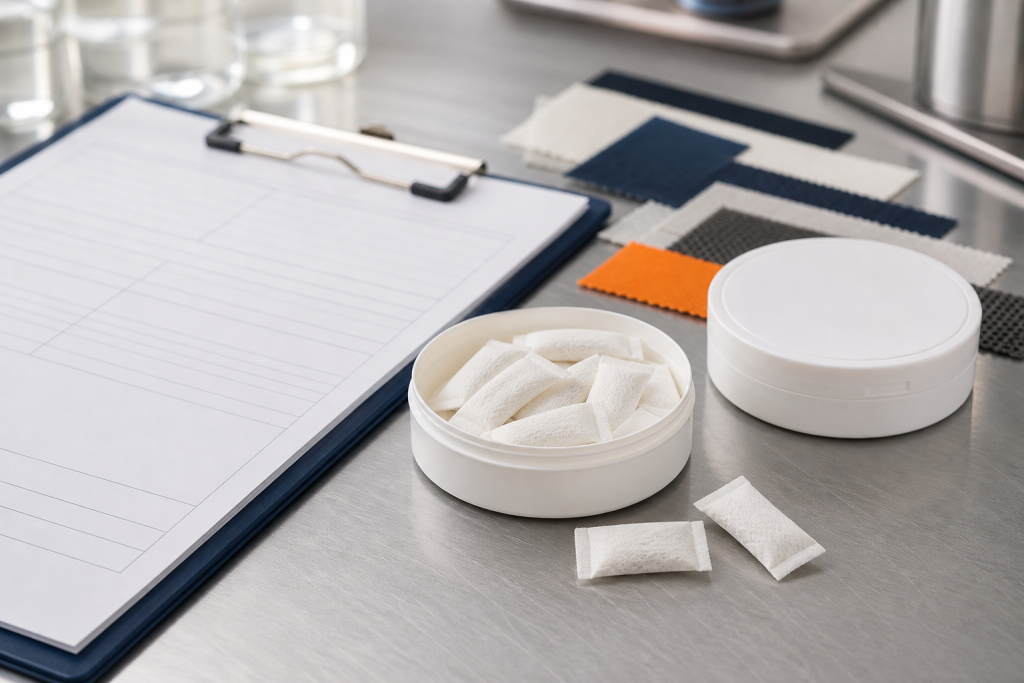
A modern oral-pouch can is normally a low, round molded-plastic pack. Its curved edge, lid seam and opening tab change how artwork reads from the front and shelf angle. Approve the design on a physical or production-equivalent sample, not only a flat PDF.
Copy checklist for a nootropic pouch label
| Area | What the brand should verify |
|---|---|
| Product identity | Clear nicotine-free and tobacco-free description where accurate; no confusion with nicotine pouches |
| Formula | Ingredient names, grades where relevant, amounts per pouch or serving and total caffeine from purified and botanical sources |
| Directions | Placement between lip and gum, number of pouches, intended duration, removal and disposal |
| Warnings | Market-appropriate caffeine, age, pregnancy, medical-condition and keep-away-from-children statements |
| Pack information | Pouch count, net quantity, storage, lot and date fields, manufacturer or responsible business and contact details |
| Claims | Evidence-backed wording only; no treatment, ADHD, IQ or guaranteed-performance claims |
| Codes | Buyer-owned GTIN/UPC/EAN, correct symbology, quiet zones, contrast and verified scan result |
Prepare production artwork, not a screenshot
Supply the editable vector source requested by the printer plus a locked review PDF. Embed or outline fonts according to the printer’s instructions, link or embed high-resolution images, and identify process colors, spot colors, white ink, varnish, foil or other finish layers separately. Screen RGB colors are not reliable print targets.
Keep small type and logos as vector artwork. Confirm minimum type size, line weight, barcode reduction limits and reverse-text capability for the actual press and material. A matte label, white plastic can, clear film and direct print can produce different color and opacity results even when the same digital color values are used.
Barcode and variable-data checks
Do not use a visually similar placeholder barcode in the final proof. The brand should own or be authorized to use the number and should verify the encoded data, check digit, size, quiet zones, orientation and contrast. Scan printed production samples rather than assuming that a screen proof guarantees performance.
Separate fixed artwork from variable data such as lot, manufacturing date, best-before date or country-specific sticker information. Confirm which party creates each code, which font or printer is used, and where quality staff will verify legibility during production.
Build a controlled approval sequence
- Freeze the commercial formula, pouch count, flavor name and target markets.
- Receive the supplier-approved dieline and technical print requirements.
- Complete regulatory and claims review before prepress release.
- Check copy against the signed product specification line by line.
- Review the digital proof for layout and separations.
- Approve a physical or production-equivalent proof for color, fit and readability.
- Issue one signed release PDF and source-file package with revision number and date.
- Compare first-off production cans and pre-shipment samples with that approved version.
Common label-artwork failures
- Designing from a generic mockup before the production can is selected
- Using a nicotine-pouch label as the compliance template for a nicotine-free supplement
- Forgetting caffeine contributed by guarana, tea or coffee extracts
- Placing critical copy under the lid overhang or in the wrap overlap
- Approving color only on a bright monitor
- Reusing one barcode across different flavors, strengths or counts
- Sending corrections through chat without updating the controlled proof
Frequently asked questions
Can I use a VELO or ZYN can as my artwork template?
No. It may be a physical-format reference, but the OEM project needs its own supplier-approved dieline, original brand design and market-specific label review. Do not copy protected trade dress, logos or graphics.
Should the formula be finalized before the label?
Yes. Ingredient identity, per-pouch amounts, caffeine, serving design and warnings directly affect label content. Late formula changes require a controlled artwork revision.
Is a digital PDF proof enough?
It can confirm copy and layout, but it cannot fully demonstrate color, opacity, label fit, seam visibility, barcode scanning or the appearance of the decorated production can.
Who is responsible for final label compliance?
Responsibilities should be stated in the manufacturing agreement. The brand should not assume that a printer’s technical approval is regulatory approval; market-specific legal review remains necessary.
Related OEM resources
Continue with our packaging guide, custom can dimensions guide, GS1 barcode checklist and OEM project inquiry.
Reviewed 7 September 2026. General B2B educational information; market-specific regulatory and legal review is required.
Buyer decision summary
Use this page as a decision framework, not as a substitute for a signed product specification or market-specific review. A credible nootropic pouch project identifies the finished product category, the amount of every active per pouch, total caffeine from all sources, intended adult use, packaging configuration and target jurisdiction. Commercial figures such as MOQ and lead time should be tied to the actual formula, flavor, strength and artwork version. Before approval, compare a production-equivalent sample with measurable acceptance criteria and assign responsibility for claims, labels, release testing and later changes. This prevents a general marketing statement from being mistaken for a guaranteed specification and gives procurement, formulation, quality and regulatory teams the same reference point.
Key parameters to confirm
- Target jurisdiction: Classify the finished product before finalizing formula, claims, directions or artwork.
- Label owner: Assign approval of mandatory copy, warnings, responsible-business details and translations.
- Claims boundary: Avoid disease, ADHD, IQ, cure or guaranteed-performance language unless specifically permitted and substantiated.
- Change control: Re-review after ingredient, dose, supplier, serving, market or packaging changes.
Continue this topic
- Nootropic Pouch Regulations and Labeling: Questions to Ask Before Launch
- Nootropic Pouch FDA Label Claims: Focus Support Without Medical Language
Content status: Reviewed 13 September 2026. General B2B information; project-specific commercial, technical and regulatory details require written confirmation.