

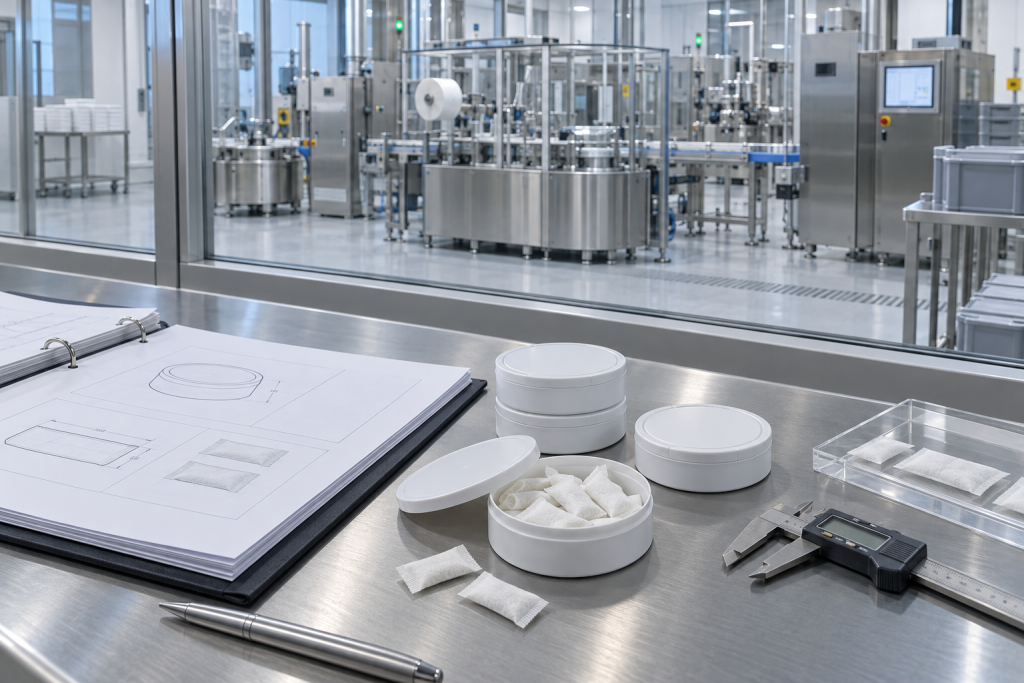
Confirm who will manufacture the product
Request the legal entity, site address, manufacturing scope, applicable registrations or certifications and subcontracted steps. Match the name on certificates, quotations, specifications and export documents. Ask whether formulation, pouch conversion, filling, testing, labeling and storage occur at the same site. If another company supplies a critical step, define how it is qualified and controlled. A virtual audit can screen documents, but higher-risk or high-volume projects may justify an on-site or qualified third-party audit.
Follow one batch through the system
Select a recent comparable batch and trace raw-material approval, weighing, reconciliation, mixing parameters, in-process checks, pouch count, packaging issuance, finished testing and release. Verify that corrections are attributable and records connect to actual material lots. Inspect segregation of allergens or potent materials where relevant, sanitation status, environmental conditions, pest control, maintenance and calibration. Compare written procedures with operator practice rather than accepting a prepared presentation as the audit result.
Review laboratory and release controls
Ask which tests are performed in-house and which are outsourced, how methods are selected, how laboratories are qualified and who reviews atypical or out-of-specification results. The finished specification should address identity or active content as relevant, weight, moisture or water activity where critical, microbiological limits, pouch and package integrity and sensory attributes. Confirm reserve samples, COA generation, release authority and how test or method changes are communicated to the brand.
Commercial controls belong in the audit
Capacity, MOQ and lead time should be connected to equipment, staffing, packaging availability and approval gates. Review sample status, artwork control, forecast expectations, minimum runs per SKU, rework policy, yield loss and contingency planning. A quality agreement should define specification ownership, deviations, changes, complaints, recalls, document access, testing, rejection and disposal. Score findings by risk, assign corrective actions and verify closure before the first commercial purchase order.
Key parameters buyers should record
- Target market, sales channel and responsible business
- Formula, amount per pouch, pouch count and commercial packaging configuration
- Test method, conditions, sample status and predefined acceptance criteria
- Named owner for approval, deviations, changes and release
Frequently asked questions
Can a GMP certificate replace a factory audit?
No. It is useful evidence, but buyers should verify scope, validity and how the quality system operates for the proposed product.
What should be checked during a remote audit?
Legal identity, live production areas where permitted, controlled records, recent batch traceability, testing, deviations, CAPA, complaints and capacity evidence.
How often should the OEM be requalified?
Use a risk-based interval and reassess after serious failures, major changes, regulatory events or material shifts in product or volume.
Source and related reading
Technical boundary references include the FDA audit standards comparison for dietary supplement CGMPs. Continue with the quality-control buyer guide, packaging guide and OEM project inquiry.
Reviewed 29 September 2026. General B2B educational information; confirm product, market, laboratory, customs and contractual requirements for the actual project.