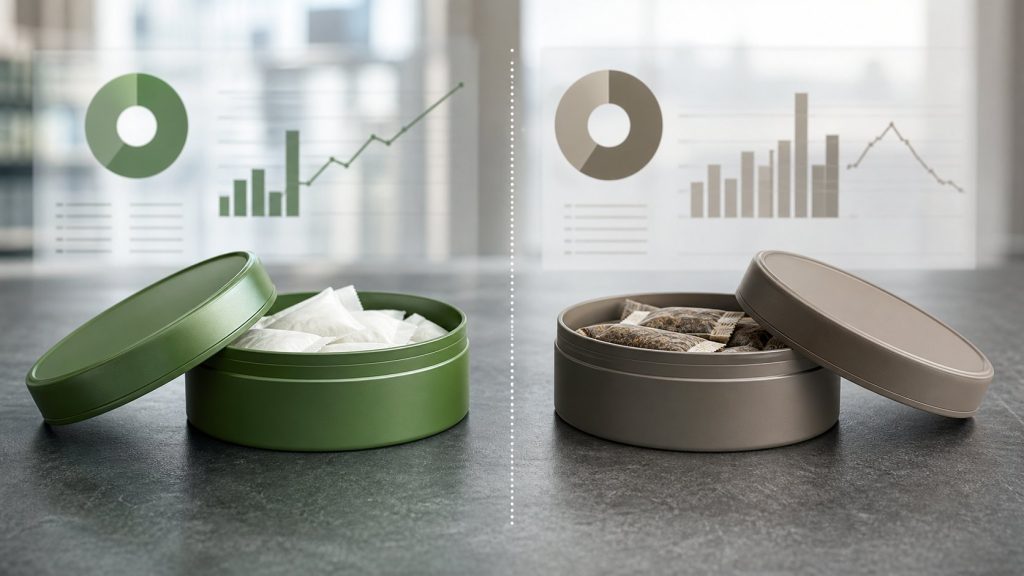


Quick answer: Pouches emphasize portability and no liquid, while energy drinks provide hydration volume and familiar beverage use. Neither format is automatically healthier.
Key takeaways
- Verify the exact current label, per-pouch amounts and nicotine-free identity.
- Distinguish ingredient evidence from finished-product evidence.
- Use responsible adult positioning and market-specific compliance review.
Definition and formulation context
Compare total caffeine and other stimulants, sugar or sweeteners, serving size, onset claims, duration evidence, cost per use and stacking risk.
Evidence, release and limitations
A sugar-free pouch can still contain caffeine and other active ingredients. An energy drink may include ingredients absent from a pouch.
Buyer and brand implications
Retailers should use clear caffeine disclosure and avoid encouraging simultaneous use.
Formula and sourcing checklist
| Area | What to verify |
|---|---|
| Actives | Identity, amount per pouch, source, assay and lawful market status |
| Finished product | Uniformity, microbiology, moisture, pH, oral comfort and stability |
| Label | Category, caffeine disclosure, warnings, claims and responsible party |
| Commercial | MOQ per SKU, lead time, testing, packaging and landed cost |
Frequently asked questions
Do pouches work faster than energy drinks?
Not as a universal rule; finished-product data and ingredient route matter.
Are pouches calorie-free?
Not automatically; verify the complete formula and applicable label.
Related buyer resources
Continue with our complete buyer’s guide, ingredient guide, safety overview and OEM inquiry page.
Authoritative background
Reviewed 13 August 2026. Educational information only; not medical or legal advice. Brand formulas may change—verify the current manufacturer label.
Buyer decision summary
Use this page as a decision framework, not as a substitute for a signed product specification or market-specific review. A credible nootropic pouch project identifies the finished product category, the amount of every active per pouch, total caffeine from all sources, intended adult use, packaging configuration and target jurisdiction. Commercial figures such as MOQ and lead time should be tied to the actual formula, flavor, strength and artwork version. Before approval, compare a production-equivalent sample with measurable acceptance criteria and assign responsibility for claims, labels, release testing and later changes. This prevents a general marketing statement from being mistaken for a guaranteed specification and gives procurement, formulation, quality and regulatory teams the same reference point.
Key parameters to confirm
- Product identity: State whether the SKU contains nicotine, tobacco or caffeine; these are not interchangeable categories.
- Dose basis: Show every active amount per pouch and per serving, including caffeine from all sources.
- Evidence boundary: Describe intended support without promising treatment, disease prevention or guaranteed results.
- User boundary: Define adult-use guidance, warnings, maximum daily use and conditions requiring professional advice.
Continue this topic
- What Are Nootropic Pouches? A Practical Guide for First-Time Users
- How Do Nootropic Pouches Work? Release, Absorption and Onset Explained
- Are Nootropic Pouches Safe? A Caffeine, Ingredient and Oral-Comfort Checklist
Content status: Reviewed 13 September 2026. General B2B information; project-specific commercial, technical and regulatory details require written confirmation.