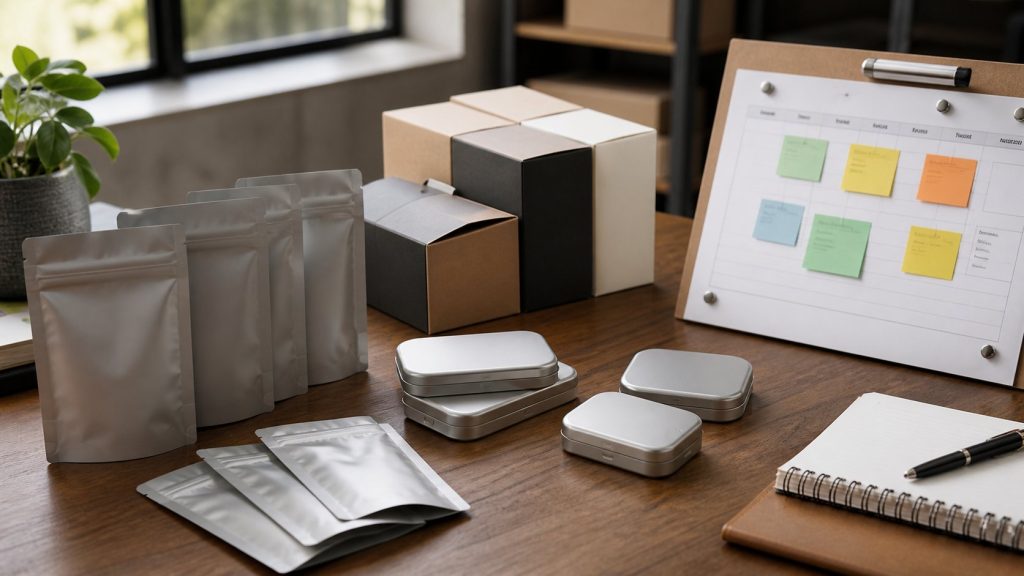

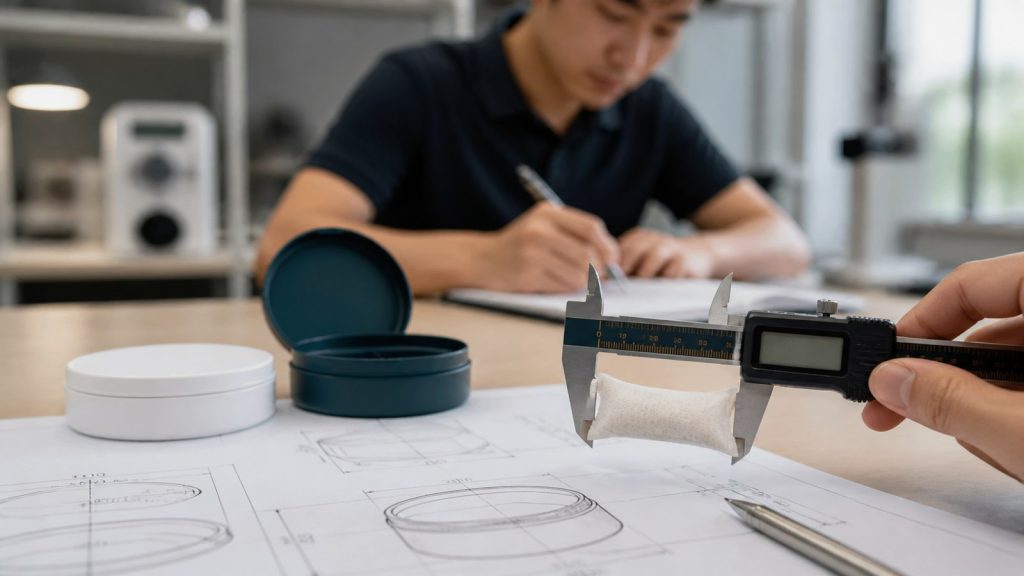
Quick answer: Custom nootropic pouch can dimensions should be selected from the actual pouch size, count, conditioned thickness, headspace, closure and shipping needs. Modern category cans are typically low-profile and round, but exact dimensions are tooling-specific. Never approve artwork from a visual mockup without a supplier dieline and physical fit test.
Start with the product, not the label
Record the pouch’s dry and conditioned length, width, thickness, fill weight and expected swelling. Test the target count in the can after production conditioning. Too little headspace can crush seams or prevent closure; too much can make the pack feel underfilled and increase movement.
Can and lid specification
| Feature | Buyer decision |
|---|---|
| Body | Outside and inside diameter, usable depth, resin and color |
| Closure | Snap force, seal geometry, opening cycles and tamper evidence |
| Top compartment | Whether a separate used-pouch cavity is required and how it opens |
| Decoration | Pressure-sensitive label, in-mold label, sleeve or direct print |
| Codes | Lot, best-before and barcode position with readable contrast |
Stock tooling versus a custom mold
A stock can normally reduces tooling, lead time and component MOQ. A custom mold can create a proprietary silhouette or closure, but requires engineering drawings, samples, validation, ownership terms and replacement planning. Confirm who owns the tool and whether the supplier may reuse it.
Artwork and prepress controls
Obtain the printer’s current dieline, bleed, safe area, color profile and barcode requirements. Use a controlled artwork approval showing ingredients, net quantity, servings, responsible business details, lot coding area and market-specific warnings. Screen proofs cannot validate color or adhesion; approve a physical decorated sample.
Packaging qualification
- Count and fit after conditioning
- Repeated open-close and drop testing
- Label scuff, rub, moisture and adhesion checks
- Seal and aroma retention during stability
- Case compression, barcode scan and transit simulation
Frequently asked questions
What is the standard nootropic pouch can size?
There is no single standard. Measure supplier tooling and validate it with the finished pouch count.
Should a can copy a nicotine-pouch brand?
No. Category-appropriate proportions may inform usability, but use original branding and avoid copied trade dress.
When should artwork be locked?
After formula, count, legal text, dieline and coding areas are confirmed, but before production printing.
Buyer due-diligence checklist
- Define the destination market, product classification and intended adult customer.
- Approve written finished-product and packaging specifications.
- Request lot traceability, relevant test methods, change control and complaint procedures.
- Compare landed cost and reorder risk, not a headline unit price alone.
Continue with our 2026 nootropic pouch buyer’s guide, wholesale supplier checklist or OEM project inquiry.
Reviewed 15 August 2026. Educational B2B information, not medical or legal advice. Product classification and requirements vary by market.
Buyer decision summary
Use this page as a decision framework, not as a substitute for a signed product specification or market-specific review. A credible nootropic pouch project identifies the finished product category, the amount of every active per pouch, total caffeine from all sources, intended adult use, packaging configuration and target jurisdiction. Commercial figures such as MOQ and lead time should be tied to the actual formula, flavor, strength and artwork version. Before approval, compare a production-equivalent sample with measurable acceptance criteria and assign responsibility for claims, labels, release testing and later changes. This prevents a general marketing statement from being mistaken for a guaranteed specification and gives procurement, formulation, quality and regulatory teams the same reference point.
Key parameters to confirm
- Pack hierarchy: Approve pouch, can, label, inner pack, master carton and shipping configuration as one system.
- Production equivalence: Validate the intended count, weight, can, closure, divider, tape and carton board.
- Distribution route: Specify parcel, ecommerce, mixed case, pallet, climate and storage exposure.
- Acceptance criteria: Define functional damage, cosmetic limits, label legibility, leakage and safe handling before testing.
Continue this topic
- Nootropic Pouch Packaging Guide: Tins, Labels, Shelf Life and Sustainability
- Nootropic Pouch Retail Case Pack Specifications: Trays, Cartons and Pallet Data
- Bulk Shipping Nootropic Pouches: Storage Temperature, Cartons and FBA Preparation
Content status: Reviewed 13 September 2026. General B2B information; project-specific commercial, technical and regulatory details require written confirmation.