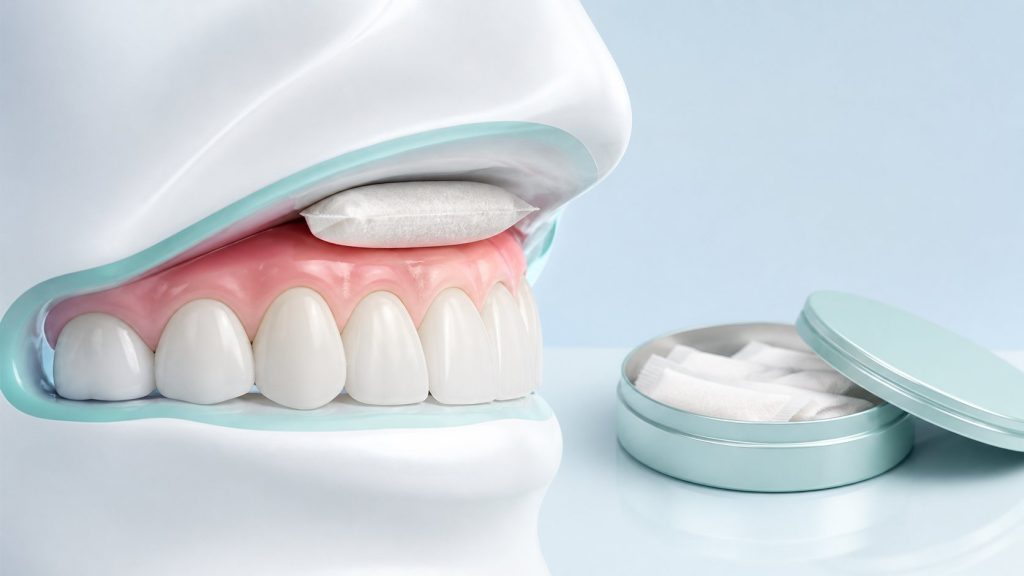


Quick answer: A nicotine-free nootropic pouch may be regulated as a food supplement, dietary supplement, conventional food or another category depending on market, ingredients, claims and presentation. There is no single global label. Classification should be confirmed before formula lock and artwork approval.
Nootropic Pouch Regulations and Labeling: Questions to Ask Before Launch
Review ingredient permissibility, maximum levels, novel-food or new-dietary-ingredient status, allergen rules, caffeine warnings, nutrition or supplement panels, language, business-operator details and claim substantiation. Online listings and influencer content are part of compliance too. This overview is general information, not legal advice; use qualified local counsel.
How to evaluate your options
- Check the complete ingredient list and amount per pouch.
- Choose clearly labeled, nicotine-free products from a traceable supplier.
- Review warnings, directions, storage conditions and best-before date.
- For brands, confirm specifications, testing, claims and target-market compliance before launch.
Practical takeaway
A nicotine-free nootropic pouch may be regulated as a food supplement, dietary supplement, conventional food or another category depending on market, ingredients, claims and presentation. There is no single global label. Classification should be confirmed before formula lock and artwork approval. The most useful comparison is based on the finished product specification, not a broad category claim. For custom manufacturing, contact our team with your target market, formula direction and estimated volume.
Frequently asked questions
Are nootropic pouches regulated like nicotine pouches?
Usually not when they contain no nicotine, but classification varies by jurisdiction and product details. Obtain market-specific advice.
Where can brands request a custom sample?
Start with our white label nootropic pouches overview, then send a product brief through the contact page.
Editorial note: General educational information only; not medical or legal advice.
Country launch checklist
| Market | Pre-print review |
|---|---|
| United States | Classification, ingredient status, identity, facts panel, claims, responsible party |
| EU | Novel food, permitted ingredients, claims, language, country notification |
| United Kingdom | Food supplement rules, caffeine guidance, claims and operator details |
| Australia | Food versus therapeutic-goods classification, ingredients and claims |
Import file
Maintain commercial invoice, packing list, origin and transport documents, product specification, lot COA, label copy and any required registrations or notifications.
Buyer decision summary
Use this page as a decision framework, not as a substitute for a signed product specification or market-specific review. A credible nootropic pouch project identifies the finished product category, the amount of every active per pouch, total caffeine from all sources, intended adult use, packaging configuration and target jurisdiction. Commercial figures such as MOQ and lead time should be tied to the actual formula, flavor, strength and artwork version. Before approval, compare a production-equivalent sample with measurable acceptance criteria and assign responsibility for claims, labels, release testing and later changes. This prevents a general marketing statement from being mistaken for a guaranteed specification and gives procurement, formulation, quality and regulatory teams the same reference point.
Key parameters to confirm
- Target jurisdiction: Classify the finished product before finalizing formula, claims, directions or artwork.
- Label owner: Assign approval of mandatory copy, warnings, responsible-business details and translations.
- Claims boundary: Avoid disease, ADHD, IQ, cure or guaranteed-performance language unless specifically permitted and substantiated.
- Change control: Re-review after ingredient, dose, supplier, serving, market or packaging changes.
Continue this topic
Content status: Reviewed 13 September 2026. General B2B information; project-specific commercial, technical and regulatory details require written confirmation.