

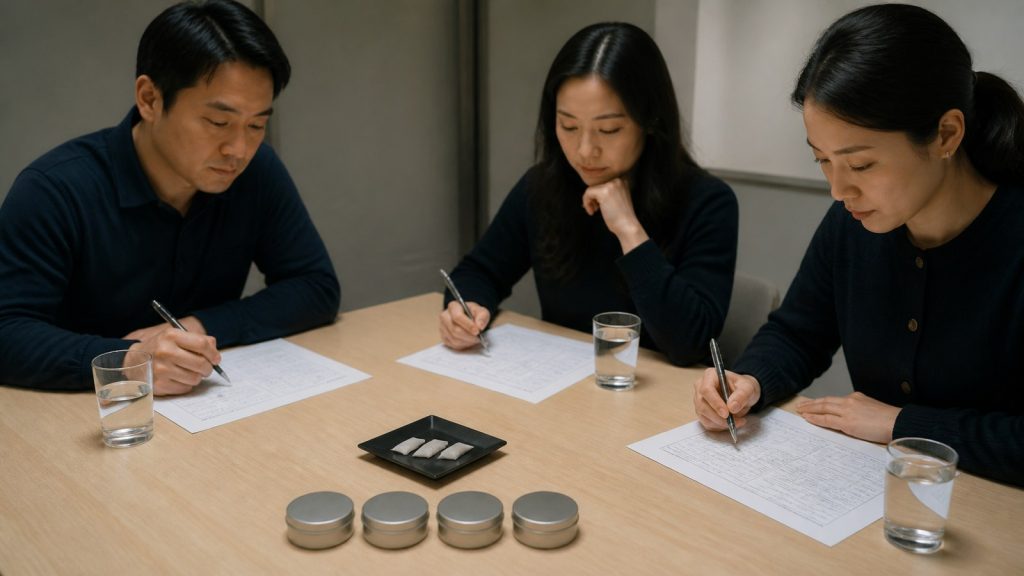
Quick answer: A useful nootropic pouch sensory evaluation separates attributes instead of asking only whether a sample tastes good. Score appearance, aroma, placement, softness, flavor onset, intensity, bitterness, cooling, drip, seam feel, aftertaste and any discomfort at defined time points.
What buyers need to understand
Use coded samples, a consistent environment and the same placement duration. Record caffeine exposure and stop criteria. Panel work is product-development research, not a substitute for toxicology, clinical evidence or regulatory review.
How to specify and verify it
Compare samples blind when practical. Set target ranges rather than selecting the strongest flavor. Document panel, lot, storage history, order, time points and deviations so results can be reproduced.
Information to request in an RFQ
| Area | Required detail |
|---|---|
| Product | Formula, amount per pouch, size, count, flavor and target market |
| Method | Sample preparation, equipment, conditions, units and acceptance criteria |
| Quality | Lot records, deviations, release approval and change notification |
| Packaging | Can, closure, label, coding, case pack and shelf-life protection |
Common procurement mistakes
- Approving an attractive sample without measurable specifications
- Comparing results produced by different methods as if they were equivalent
- Locking artwork before formula, count and legal review
- Ignoring stability, shipping and commercial-scale variability
OEM buyer checklist
- Approve a written, revision-controlled finished-product specification.
- Confirm ingredient status, labeling and claims for the destination market.
- Request lot traceability, relevant testing, change control and retained samples.
- Evaluate results in final packaging and under the intended storage conditions.
Frequently asked questions
Can one number or sample approve the product?
No. Quality decisions combine specifications, methods, trend data, sensory performance, packaging and market requirements.
Should the supplier define every limit?
The manufacturer can propose capable ranges, but the brand owner should review and formally approve the commercial and regulatory specification.
How should buyers compare suppliers?
Give each supplier the same written brief, test requirements, packaging scope and destination so comparisons remain meaningful.
Related resources
See the 2026 buyer’s guide, wholesale supplier checklist and OEM project inquiry.
Reviewed 17 August 2026. General B2B educational information, not medical or legal advice.
Buyer decision summary
Use this page as a decision framework, not as a substitute for a signed product specification or market-specific review. A credible nootropic pouch project identifies the finished product category, the amount of every active per pouch, total caffeine from all sources, intended adult use, packaging configuration and target jurisdiction. Commercial figures such as MOQ and lead time should be tied to the actual formula, flavor, strength and artwork version. Before approval, compare a production-equivalent sample with measurable acceptance criteria and assign responsibility for claims, labels, release testing and later changes. This prevents a general marketing statement from being mistaken for a guaranteed specification and gives procurement, formulation, quality and regulatory teams the same reference point.
Key parameters to confirm
- Product identity: State whether the SKU contains nicotine, tobacco or caffeine; these are not interchangeable categories.
- Dose basis: Show every active amount per pouch and per serving, including caffeine from all sources.
- Evidence boundary: Describe intended support without promising treatment, disease prevention or guaranteed results.
- User boundary: Define adult-use guidance, warnings, maximum daily use and conditions requiring professional advice.
Continue this topic
- What Are Nootropic Pouches? A Practical Guide for First-Time Users
- How Do Nootropic Pouches Work? Release, Absorption and Onset Explained
- Are Nootropic Pouches Safe? A Caffeine, Ingredient and Oral-Comfort Checklist
Content status: Reviewed 13 September 2026. General B2B information; project-specific commercial, technical and regulatory details require written confirmation.