

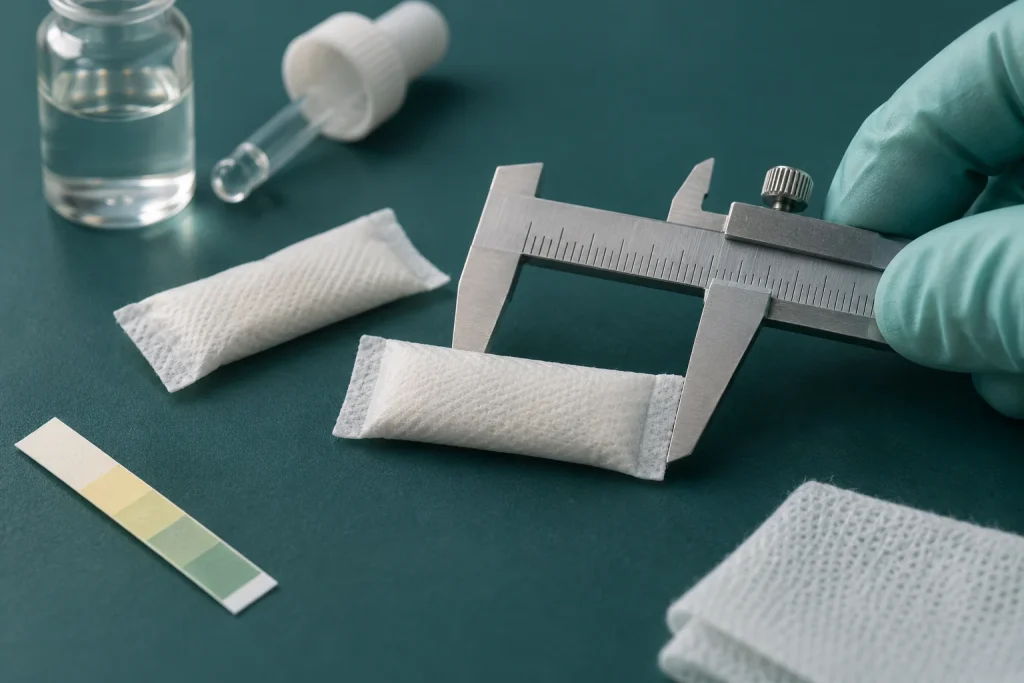
Answer first: Burning or peeling is a reason to stop using a pouch, not a sign that a focus ingredient is “working.” A brand investigating repeated complaints should compare pH, moisture, fabric, seams, flavor system, wear instructions and affected lots. Nicotine-pouch oral-health studies raise useful questions but do not establish the risk of a nicotine-free nootropic formula. Finished-product testing and careful complaint records are necessary.
What can a user do when a pouch causes discomfort?
Remove it. Do not keep the pouch against a sore area to see whether the feeling passes. If irritation is severe, recurrent or accompanied by peeling, swelling, bleeding or other symptoms, seek appropriate dental or medical advice. Save the can and lot code so the brand can trace the batch. A product team should not offer a diagnosis over social media or promise that the sensation is harmless. A 2024 systematic review found oral mucosal changes and symptoms among users of nicotine pouches, but included only three studies with high risk of bias. These findings cannot be copied over to a nicotine-free formulation as a numerical risk estimate. They do justify taking oral complaints seriously.
Which formula and material variables can change mouthfeel?
Start with observable variables rather than a single assumed cause. A high local concentration of flavoring or sweetener may taste sharp; a dry pouch can feel rough; a thick seam or inconsistent nonwoven may rub one spot. Moisture and pH affect how the pouch feels and how ingredients move into saliva. The actual effect depends on the complete formulation and use conditions. Compare an affected production lot with the approved sample and an unaffected lot, using the same method. Record pouch mass and dimensions, seam integrity, measured pH under a defined extraction protocol, moisture or water activity, and flavor distribution. Our pH and oral-comfort guide details the measurement questions.
Buyer sample observations worth recording
- Initial contact and comfort after the label’s intended wear period.
- Edge roughness, clumping, leakage and uneven wetting.
- Flavor intensity, aftertaste and location-specific irritation reports.
- Can lot, pouch lot, storage condition and time since opening.
How should an OEM separate formulation from process defects?
A new complaint pattern after a supplier or production change deserves an immediate comparison of change records. Inspect nonwoven grade, seam temperature and pressure, fill weight, ingredient particle size and flavor addition order. If complaints follow one flavor only, review that flavor’s loading and raw-material identity. If they cluster around one batch, examine line clearance, in-process checks and retained samples before changing every SKU. Sensory panels can identify comfort problems, but they do not replace objective release criteria or medical assessment. Keep test conditions consistent so two sample rounds can be compared. A manufacturer’s ability to make a white pouch is not proof that its edge, texture or chemistry is acceptable for repeated oral contact.
What must be in a complaint and escalation record?
Record the exact product and lot, where and when it was bought, use duration, description of the reaction, relevant photos if voluntarily supplied, whether the person sought care, and whether any sample remains. Protect personal information. A quality owner should decide whether the event suggests a batch defect, a labeling issue, an adverse-event report, or a possible recall assessment. FDA asks consumers and industry to report suspected serious reactions to dietary supplements and also accepts product-quality complaints; the exact obligation depends on product classification and jurisdiction. A brand should have its reporting route set before launch. Our complaint-handling checklist covers the operational handoff.
What should brands avoid saying?
Do not describe persistent stinging as normal activation, and do not treat “nicotine-free” or “sugar-free” as a guarantee of oral comfort. A package can explain intended placement, wear time, disposal and when to stop use without promising a clinical result. Claims about gentleness, gum health or no irritation need suitable evidence for the finished pouch. If a flavor or fabric change is made to address complaints, update the formula revision, sensory acceptance criteria and stability plan before relaunch. Publish a useful consumer answer, but keep any diagnosis with a dental or medical professional.
Frequently asked questions
Should a pouch sting to show it is working?
No. Stinging is a sensory observation, not evidence that a nootropic ingredient is effective. If discomfort persists, stop using the pouch and seek dental or medical advice as appropriate.
Can a caffeine-free pouch still irritate the mouth?
Yes. Fabric, seam, moisture, flavorings, sweeteners and other ingredients can all affect comfort. A caffeine-free label does not establish oral safety.
Is pH the only cause of oral irritation?
No. pH is one variable. A complaint investigation should also examine fabric, edge quality, moisture, flavor load, wear duration and individual sensitivity.
What evidence should a brand keep after a complaint?
Keep the lot number, product and packaging photos, use history, symptom description, remaining sample, batch release results and disposition. Escalate a potentially serious reaction through the applicable market process.
Authoritative references
- PubMed, 2024 systematic review of oral nicotine pouches and oral health
- FDA, How to Report a Problem with Dietary Supplements
- FDA, Questions and Answers on Dietary Supplements
Related buyer resources
Reviewed November 16, 2026. This guide is educational. Confirm ingredients, claims, product classification and market requirements for the exact finished pouch.