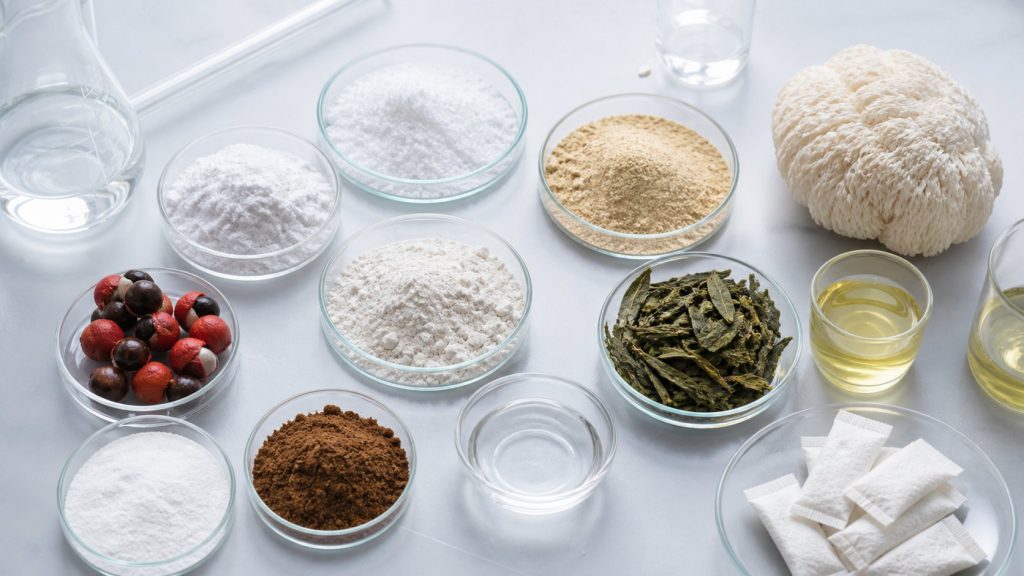

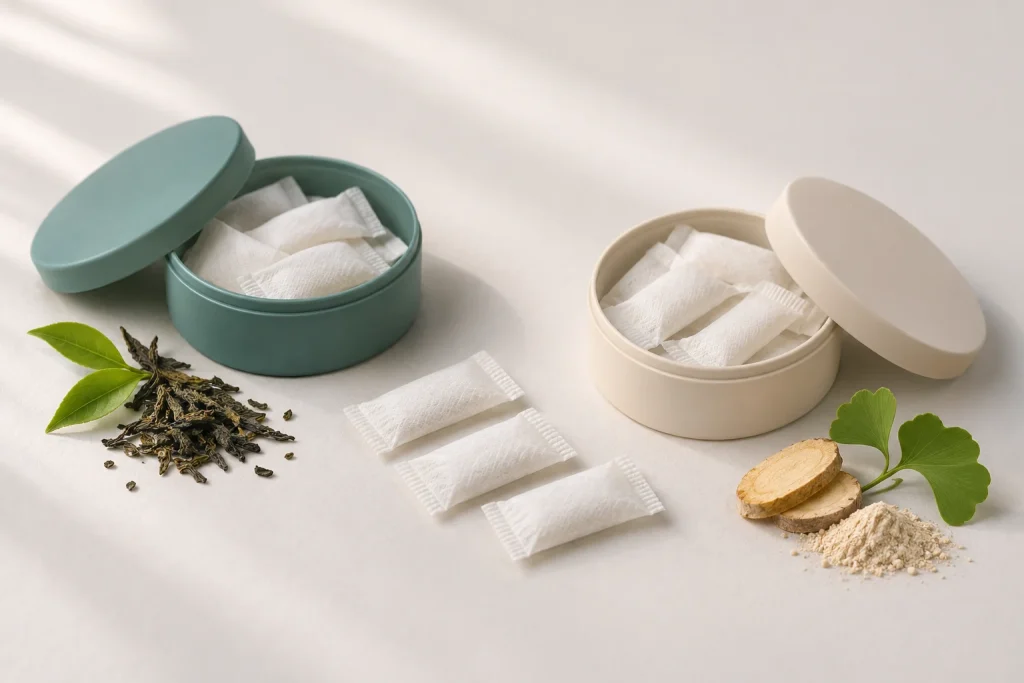
Answer first: A caffeine-free oral pouch can still contain an ingredient chosen for alertness. Caffeine-free describes one analyte; stimulant-free is a broader claim about the whole formula. For a private-label buyer, the useful comparison is the actual ingredient list, quantity per pouch, finished-batch caffeine result and the claim permitted in the destination market. A botanical name alone cannot settle the question.
What is the practical difference between the two claims?
“Caffeine-free” should mean that the final product meets a defined caffeine specification with an analytical method sensitive enough to support the claim. “Stimulant-free” asks a different question: whether any active ingredient is intended to produce a stimulating effect. Neither phrase is a standardized global approval for an oral pouch. A brand should define the market, product classification and exact wording before printing either one. An extract can complicate the distinction. Guarana contains caffeine, so a guarana formula is a poor starting point for a caffeine-free product. A no-caffeine formula built around paraxanthine may also be inappropriate for a stimulant-free position. For comparison, see our paraxanthine buyer guide.
Three checks for the formulation brief
- List every active and botanical by identity, grade and quantity per pouch.
- State whether caffeine is intentionally added or can arrive through an extract.
- Specify the exact consumer-facing claim and the test that will support it.
Why does paraxanthine need its own decision?
Paraxanthine is a metabolite of caffeine, not another spelling of caffeine. A small crossover study in 12 healthy adults investigated 50, 100 and 200 mg doses in capsules and reported changes in some cognitive task measures. That study does not validate an oral-pouch formula, prove a universal onset time or establish long-term safety. It also does not support calling paraxanthine “non-stimulating.” A buyer should request ingredient identity and safety information, the legal basis for use in each target market, and dose-specific substantiation before choosing a paraxanthine SKU. If the intended shopper is avoiding all stimulants, a formula with theanine or other non-stimulant-positioned ingredients may be a better brief, subject to the same evidence and classification review.
How should a brand explain caffeine dose without implying safety?
For most adults, FDA cites 400 mg of caffeine per day as an amount not generally associated with negative effects; EFSA reports 200 mg for a single dose and 400 mg per day for healthy adults, with important exceptions. These are population-level assessments of caffeine from all sources, not a recommended pouch dose or a guarantee for a particular person. EFSA also notes that 100 mg near bedtime may affect sleep in some adults. A product page should therefore state the per-pouch amount and serving instructions, and remind readers to count coffee, tea, energy drinks and other products. Avoid “safe for everyone,” “no crash” and “jitter-free” unless the finished product has suitable evidence.
What belongs in an OEM sample request?
Request two clearly labeled samples if you want to compare a caffeine-free focus concept with a genuinely low-stimulation concept. Keep the pouch size, carrier and flavor profile as similar as practical so the sensory comparison is interpretable. Ask the manufacturer for the active bill of materials, raw-material specifications, target per-pouch amounts, caffeine test method and result, moisture target, and a written claim review. Evaluate taste and oral comfort separately from perceived effects. A brief that says only “no caffeine” can still produce a formula the intended buyer does not want. The sample RFQ checklist provides the purchasing details to add.
Where do label and regulatory boundaries begin?
The legal category of an oral pouch varies by formulation, presentation and country. In the United States, if a product is lawfully marketed as a dietary supplement, FDA requires truthful, non-misleading structure/function claims with substantiation and the applicable disclaimer and notification. Disease-treatment language is a different category of claim. Neither a caffeine-free test nor a capsule study is a blanket authorization to sell a pouch in every market. Have a qualified reviewer assess the exact ingredients, format, warnings, age positioning, and artwork. Keep a versioned claim file and recheck it if the active source or dose changes.
Frequently asked questions
Does caffeine-free mean a pouch has no stimulating ingredients?
No. It means the finished product should meet a defensible caffeine-free claim. Other ingredients, including paraxanthine, may still have stimulant-like effects. Read the complete ingredient list and ask for a finished-batch caffeine method and result.
Is guarana compatible with a caffeine-free claim?
Guarana is a natural source of caffeine. A guarana-containing formula should not be called caffeine-free unless a qualified regulatory review establishes a valid basis for that exact formulation and market.
Is paraxanthine the same as no caffeine effect?
No. Paraxanthine is a caffeine metabolite studied for central nervous system effects. Its presence should be disclosed and reviewed on its own merits; zero caffeine is not the same promise as zero stimulation.
Should a buyer request testing for a caffeine-free SKU?
Yes. Define the claim threshold, analytical method, sampling plan and reporting limit before approving the label. A supplier statement alone does not show what is in the finished batch.
Authoritative references
- FDA, Spilling the Beans: How Much Caffeine Is Too Much?
- EFSA, Caffeine topic and safety opinion summary
- PubMed, dose-response paraxanthine crossover trial
- FDA, Structure/Function Claims
Related buyer resources
Reviewed November 16, 2026. This guide is educational. Confirm ingredients, claims, product classification and market requirements for the exact finished pouch.