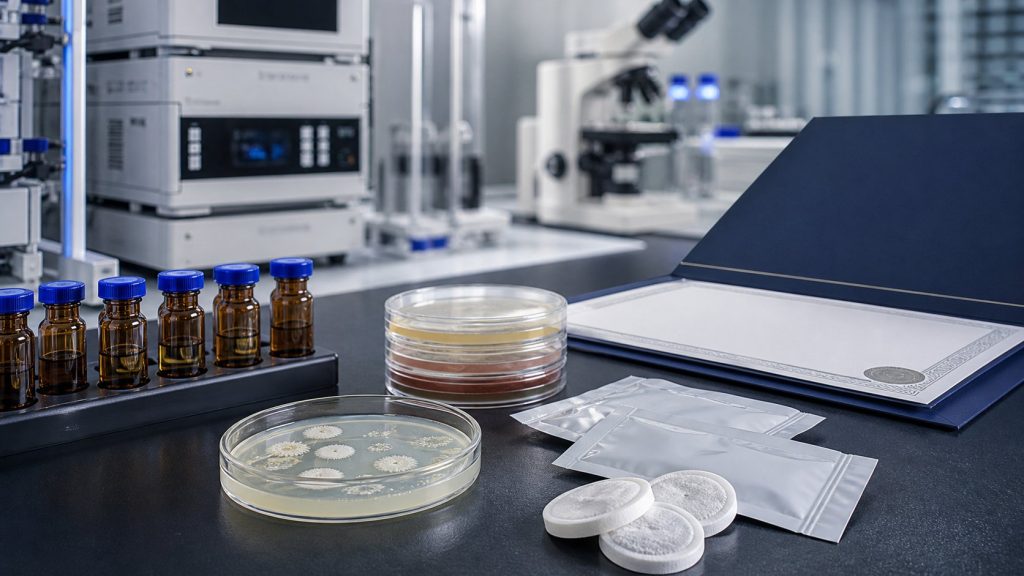

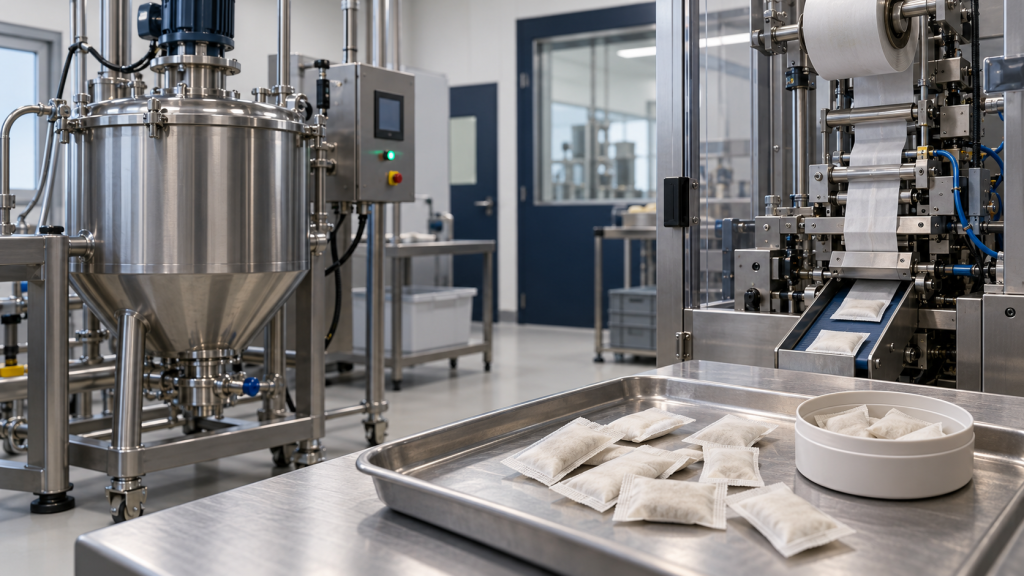
Answer first: A bench sample is ready for commercial manufacture only when the factory can reproduce its dose, fill weight, pouch seal, moisture, flavor and appearance at the intended scale. Freeze a version-controlled formula, raw-material specifications and packaging drawings, then run a documented pilot using the proposed equipment. Agree on in-process limits and finished-batch release tests before ordering printed cans. Approve the first commercial batch against those records, not against a memory of how the sample tasted.
What must be locked before a pilot run?
The transfer package should name every ingredient grade and supplier, target amount per pouch, blend order, mixing time or endpoint, nonwoven specification, pouch dimensions, seal pattern, fill-weight range and can components. Document tolerances rather than only nominal values. Include the target market and approved label copy because an ingredient substitution can alter both quality and legal review. A tasting sample without a formula revision, analytical results and lot data is not a reproducible manufacturing instruction.
Core transfer documents
- Versioned bill of materials and approved suppliers
- Raw-material and packaging specifications
- Bench and pilot batch records
- In-process control plan and release specification
- Change-control and deviation ownership
Which variables usually change at scale?
Powder flow can change when batch mass, mixer fill level or ingredient particle size changes. A flavor that feels balanced in a small hand blend may distribute unevenly in a larger mix. Nonwoven tension, sealing heat and dwell time affect leakage and edge feel. Moisture exposure during staging can shift texture and shelf stability. Define what the factory will measure during the run: blend uniformity or a suitable surrogate, fill weight, seal integrity, appearance, moisture and can count. Set investigation rules before the first out-of-limit result.
How is the first commercial batch judged?
Compare it with preapproved acceptance criteria, not a single ‘golden sample’. Review raw-material lots, equipment and line clearance, actual process settings, in-process checks, deviations, rework, finished testing, packaging reconciliation and retained samples. If the product is lawfully a U.S. dietary supplement, FDA’s Part 111 rule calls for a master manufacturing record for each unique formulation and batch size and a batch production record for each batch. Other product classifications and markets need their own regulatory assessment.
When does a change need a new pilot?
A new active grade, sweetener, flavor solvent, carrier, pouch fabric, can closure or production line can affect dose uniformity, sealing or stability. Use a written impact assessment and decide whether bench testing, targeted verification or a full pilot is needed. A change that looks commercially minor may alter a claim file or a safety review. Keep the approved version linked to purchase orders and artwork so an obsolete sample is not manufactured again.
What should the buyer receive at handoff?
Ask for an approved specification set, pilot summary, first-batch record and certificate of analysis with methods and units, packaging proof, deviation disposition, shelf-life plan and retained-sample location. The factory should also identify who can authorize a substitution and how quickly the brand will be notified. This file supports repeat orders and makes a second-source conversation more precise, even if the original manufacturer remains the supplier.
Frequently asked questions
Is an approved bench sample enough to place a production order?
No. The formula, materials, process window, specifications and scale-up evidence need documented approval.
Does every change require a full pilot?
Not necessarily. Use a documented risk assessment to choose appropriate verification for the change.
What is the difference between a master record and a batch record?
The master record states the approved process; a batch record documents what happened in one actual production batch.
Can the first commercial batch skip release testing if the pilot passed?
No. A pilot supports transfer; the commercial batch still needs release against its own agreed specifications.
Authoritative references
- FDA, Dietary Supplement CGMP Small Entity Compliance Guide
- FDA, CGMP Audit Standards Comparison, 21 CFR 111.205
- NIH ODS, Product Integrity Guidance
Related buyer resources
Reviewed October 29, 2026. This buyer guide is educational; confirm product classification, methods and claims for the exact formula and destination market.