
Answer first: A botanical name on a nootropic pouch label does not identify the extract inside. Request the Latin binomial, plant or fungal part, source, extraction solvent, extract ratio where meaningful, carrier percentage, marker assay and lot-linked identity results. The laboratory method must work on the supplied material, not merely on an unprocessed plant. For processed extracts, chemical profiling and supplier traceability often matter more than a stand-alone DNA result.
Which identity details belong on the raw-material specification?
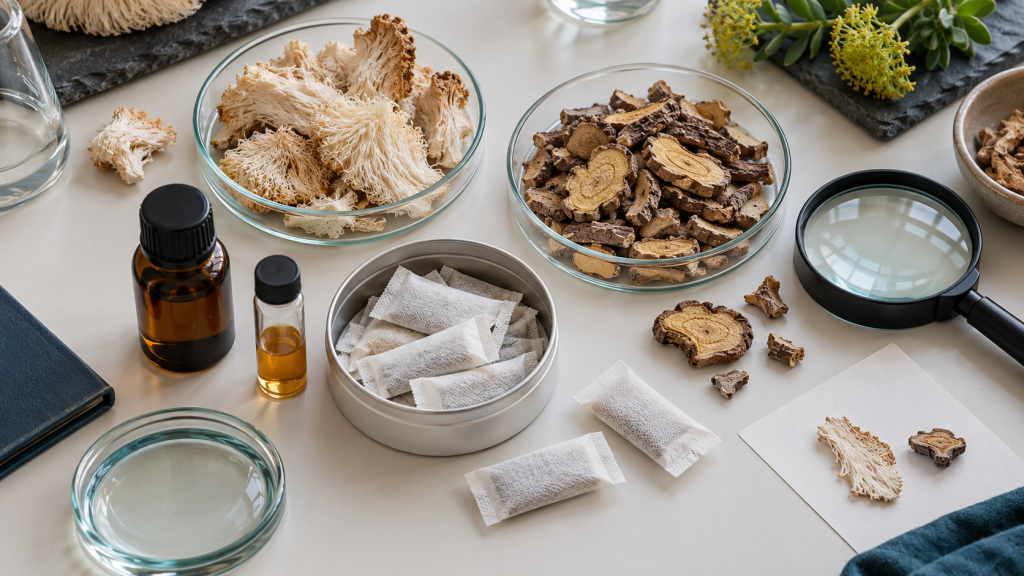
Use a scientific name and the exact harvested material. ‘Lion’s mane’ may refer to fruiting body, mycelium or a mixture; ‘rhodiola’ needs a species and plant part. The extract specification should identify solvent, extraction and drying approach, carrier or excipient percentage, reference material, assay method, acceptance criteria and contaminant limits. A trade name or a 10:1 ratio by itself cannot establish composition. NIH notes that botanical extracts vary in strength and that standardization aims to make batches more similar, but the term alone does not guarantee quality.
Fields to request from the supplier
- Latin binomial and common name
- Plant or fungal part and country of origin
- Extraction solvent, ratio and carrier content
- Identity method and marker or fingerprint results
- Lot code, manufacturing site and change-notification terms
Can DNA testing prove that an extract is authentic?
DNA can be useful for some raw botanical materials. Processing and solvent extraction can damage or remove usable DNA, so a negative DNA result from an extract may be inconclusive. USP’s discussion of botanical identification cautions against using DNA alone to confirm the identity of a plant extract. Pair a fit-for-purpose chemical fingerprint or marker assay with documented source material and process records. The right combination depends on the material and the adulteration risk; no single method is a universal authenticity stamp.
How do marker compounds differ from active-dose evidence?
A marker helps compare and control batches, but its presence does not automatically establish a clinical effect at the amount delivered by one pouch. If an OEM proposes a lion’s mane or rhodiola ‘focus’ claim, ask whether the cited human study used the same species, part, extract, dose and route. NIH’s product-integrity guidance stresses precise characterization of natural products in research. A generic ingredient study cannot silently be treated as a trial of the finished oral pouch.
What contamination and formulation checks matter?
The risk profile depends on cultivation, extraction and processing. Set relevant specifications for microbes, heavy metals, pesticides and residual solvents with a qualified laboratory and the destination market in mind. Also test the extract in the proposed pouch: color, bitterness, odor, flow, moisture uptake and stability can change after blending with fiber and flavor. A supplier COA is a starting document, not a substitute for qualification and appropriate incoming verification. If the finished product is lawfully a U.S. dietary supplement, FDA’s Part 111 component-specification rules are relevant.
How should buyers compare two extract offers?
Compare material identity before price per kilogram. Two offers with the same common name can have different plant parts, carrier loads, assay bases and sensory effects. Normalize the quote to the amount of characterized extract delivered per pouch, then ask the factory to run a bench blend and a retained stability sample. Reject a lower-priced substitute until the brand has reviewed its analytical equivalence, label impact and claim file.
Frequently asked questions
Is a 10:1 extract automatically stronger?
No. A ratio does not by itself describe the species, plant part, carrier content or measured constituents.
Should every botanical extract be DNA tested?
No. Method suitability depends on the material; processed extracts may need chemical and documentary evidence instead.
Does a marker assay prove focus benefits?
No. It helps characterize or control a batch; benefit claims need relevant human evidence for the actual claim.
What changes require requalification?
A change in species, part, source, extraction, carrier, marker method or supplier should trigger review before use.
Authoritative references
- NIH ODS, Botanical Dietary Supplements Background Information
- USP, DNA-based Methods for Botanical Identification
- NIH ODS, Product Integrity Guidance
- FDA, Dietary Supplement CGMP Small Entity Compliance Guide
Related buyer resources
Reviewed October 29, 2026. This buyer guide is educational; confirm product classification, methods and claims for the exact formula and destination market.