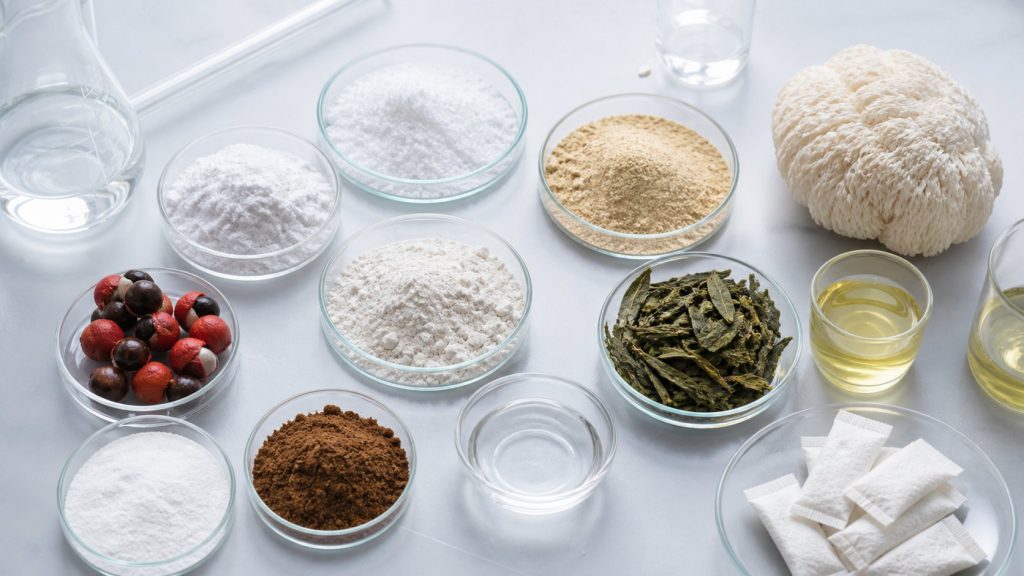

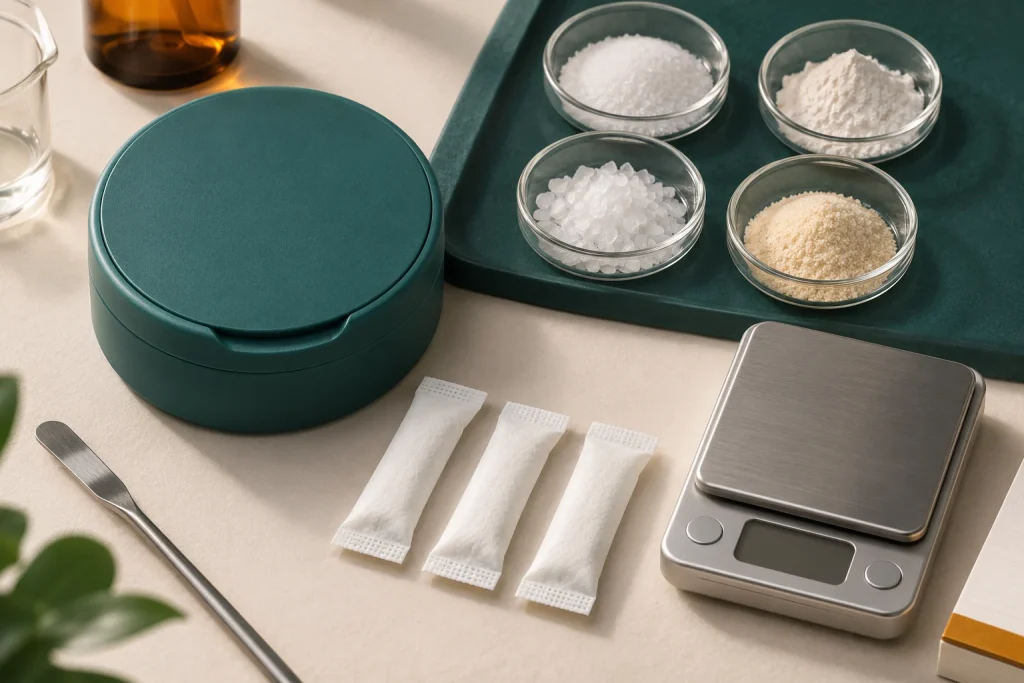
Answer first: A list of attractive ingredients is not a dose disclosure. If a label gives only a proprietary-blend total, a shopper cannot determine the quantity of each non-vitamin active from that panel. A B2B buyer can protect the formula as confidential information while still obtaining a complete bill of materials, per-pouch target amounts and batch verification. Those are separate decisions.
What does a U.S. proprietary-blend panel actually disclose?
FDA’s dietary supplement labeling guide says a proprietary blend of “other dietary ingredients” is identified by name, its total weight is declared, and the ingredients inside it are listed in descending order of predominance by weight. Dietary ingredients with established Daily Values have separate declaration requirements. These rules apply only if the oral pouch is lawfully classified and labeled as a U.S. dietary supplement; they do not decide its classification by themselves. A total such as “focus blend 300 mg” tells the reader nothing precise about how that weight is divided among the listed constituents. It also says nothing about extract potency, caffeine content from a botanical, or the amount that remains available during use.
Ask for these five quantities
- Finished pouch fill weight and recommended serving size.
- Target amount of every active per pouch, including standardized extract potency.
- Measured caffeine amount, including botanical sources.
- Manufacturing tolerance and finished-batch acceptance range.
- Quantity of any actives in a multi-pouch serving.
Why does an ingredient name alone fail an evidence check?
Human studies evaluate a defined ingredient form at a defined dose under specific conditions. A 2025 systematic review of theanine, caffeine and tea included 50 randomized trials, but only 15 could enter at least one meta-analysis. The authors found some favorable cognitive and mood outcomes while emphasizing uncertainty and the need for more research. Their results cannot be transferred automatically to a pouch that lists “L-theanine” without a quantity or release data. The same problem applies to botanical names: the plant part, extraction ratio, standardized marker and contaminants can matter. An honest product comparison should say when evidence relates to an ingredient in another format instead of presenting that evidence as a finished-pouch clinical result.
How can a brand keep its formula confidential and still be transparent?
Commercial confidentiality does not require the brand owner to remain ignorant of its own product. The manufacturer and brand can exchange a controlled specification under a confidentiality agreement, with access limited to quality, regulatory and authorized commercial staff. Public label decisions then follow the destination market’s rules and the brand’s transparency policy. Some brands voluntarily display individual per-pouch amounts; others use a legally permitted blend panel but provide a useful technical sheet on request. Either way, the batch record, approved suppliers and change-control process must be specific enough to reproduce the product. A brand should know which ingredient can change and who approves the substitution before it orders printed cans.
What can a certificate of analysis confirm?
A finished-batch certificate is evidence for the tests it names, using the method and sample specified. It may show identity, caffeine or selected active assay, moisture, microbial quality and contaminants, but it cannot silently stand in for every missing value. Ask whether the result comes from a raw material or the finished pouch, whether the laboratory is independent, and how sampling relates to the batch. Keep the label’s declared quantity and batch acceptance limit aligned. For a deeper reading checklist, use our COA guide. Marketing statements about focus or performance still need their own substantiation for the exact claim.
What should the buyer sign off before artwork?
Freeze a versioned formula, per-pouch amounts, serving directions, test plan and target market. Check that the ingredient panel, claim copy and sample specification refer to the same revision. If the formula is changed to improve taste or powder flow, repeat the regulatory and evidence review. A simple acceptance table prevents the frequent gap between a sensory sample and the commercial label: name the ingredient, source, target, allowable range, test method and owner of any change. Review the claims evidence dossier before approving a phrase that implies a consumer outcome.
Frequently asked questions
Does a proprietary blend list the amount of every active?
Not necessarily. Under U.S. supplement labeling rules, a qualifying proprietary blend lists the total blend weight and its other dietary ingredients in descending weight order. Individual quantities can remain undisclosed; buyers should still obtain the full confidential formulation.
Can the highest-listed ingredient still be underdosed?
Yes. Order by weight does not tell you whether the amount matches a human study or a finished-product claim. Compare the actual quantity, ingredient form, serving size and applicable evidence.
Should a manufacturer disclose the formula to the brand privately?
Yes, a responsible buyer should obtain a controlled bill of materials, target quantities and change-control terms, even if public artwork uses a lawful proprietary-blend format. Confidentiality can be handled contractually.
Is a lab certificate enough to infer the formula?
No. A certificate reports specified test results for a sample or batch. It does not disclose every untested ingredient or prove that a claimed cognitive benefit occurs in the finished pouch.
Authoritative references
- FDA, Dietary Supplement Labeling Guide, Chapter IV
- FDA, Questions and Answers on Dietary Supplements
- PubMed, 2025 theanine and caffeine systematic review
- FDA, Structure/Function Claims
Related buyer resources
Reviewed November 16, 2026. This guide is educational. Confirm ingredients, claims, product classification and market requirements for the exact finished pouch.