
Quick answer: A can liner must be tested with the actual nootropic pouch formula because mint, citrus, coffee flavors, humectants and moisture can interact with packaging. Buyers should require finished-pack compatibility and stability data rather than accepting a generic food-contact statement as proof of shelf life.
What compatibility testing looks for
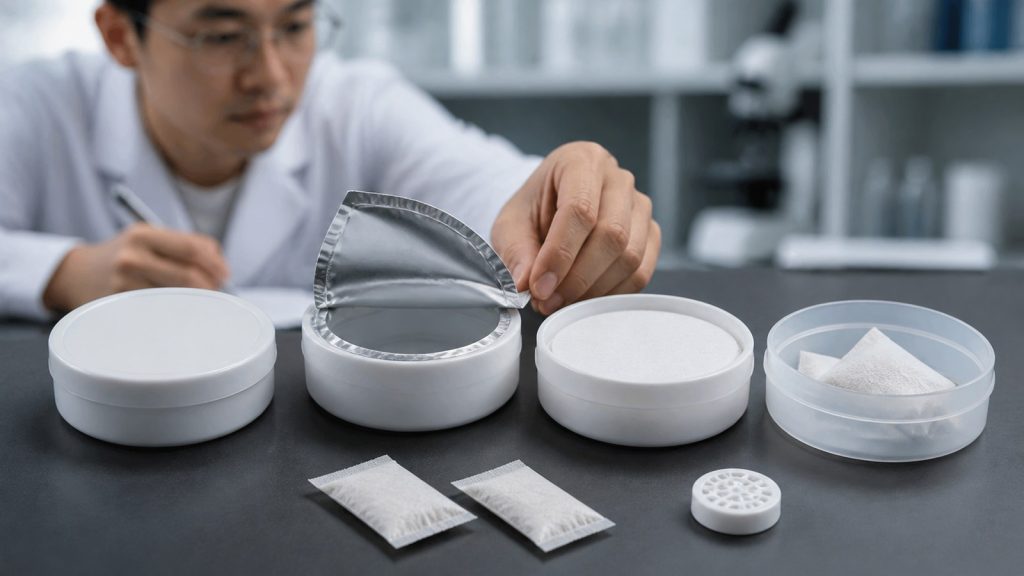
Flavor scalping occurs when packaging absorbs volatile components, weakening or unbalancing the pouch. Migration moves in the other direction: odor or chemical constituents from the lid, liner, ink or adhesive may enter the product. Moisture loss or gain can also change texture, release and seam stress.
A material may be legally suitable for food contact yet still perform poorly with a specific mint oil, citrus system or semi-moist formula. Regulatory suitability and sensory compatibility answer different questions.
Build the study around the commercial pack
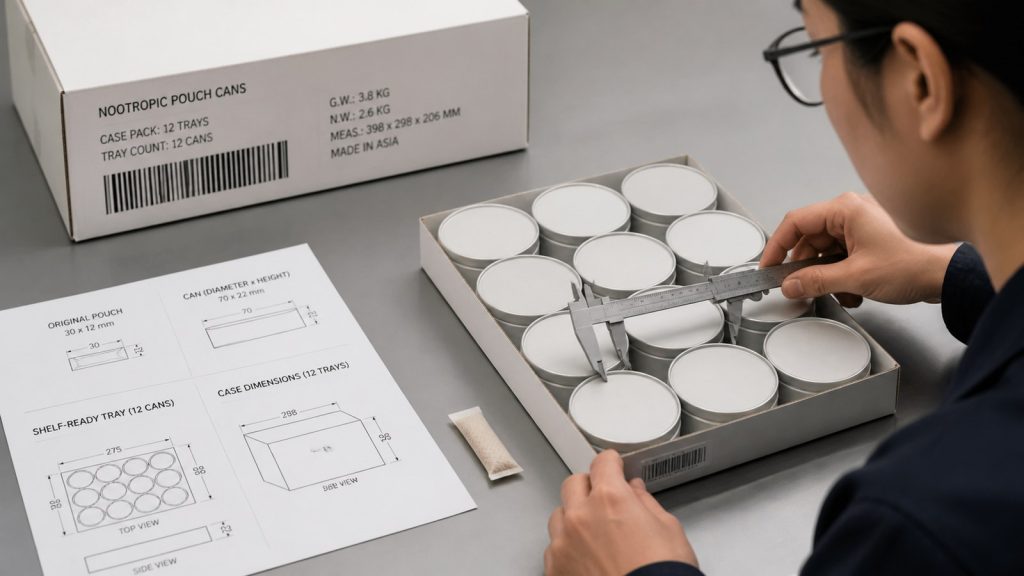
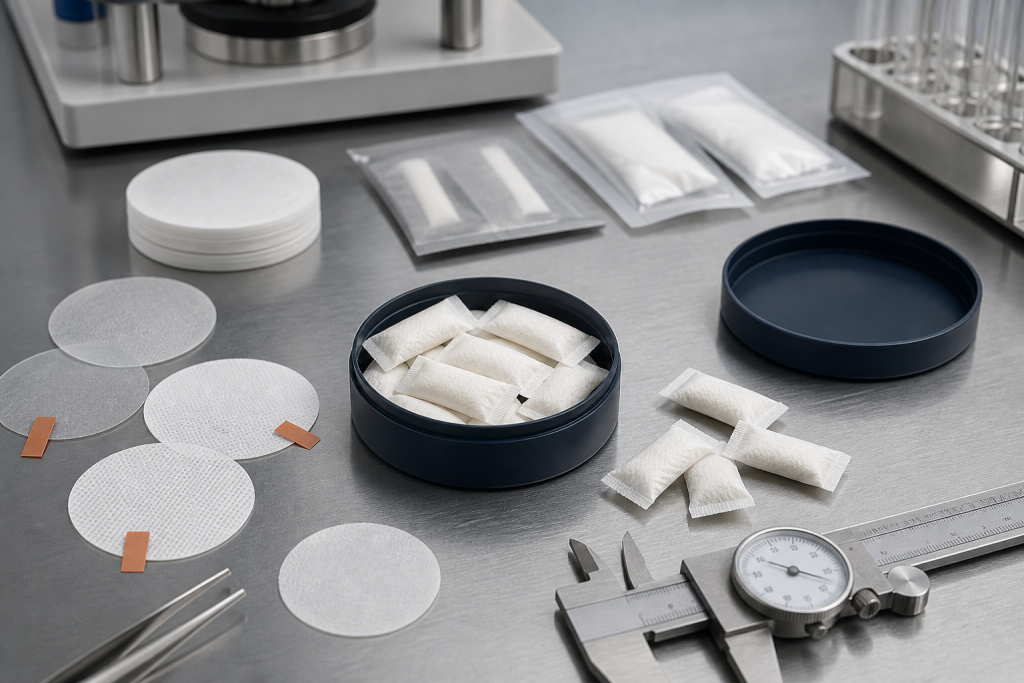
Use the production resin, colorant, liner, lid geometry, label or direct-print process, pouch count and headspace. Compare candidate liners against a control at intended and accelerated conditions. Include repeated-open simulations if consumers will open the can many times.
Measurements buyers should request
Review package odor, pouch aroma, flavor curve, active assay where relevant, moisture or water activity, mass loss, closure performance, visible staining and liner condition. Analytical migration or extractables work should be risk-based and aligned with target-market requirements.
Change control after approval
A new resin supplier, recycled-content percentage, liner coating, adhesive, ink cure, lid tool or flavor can invalidate earlier conclusions. Packaging specifications should identify critical materials and require notification before substitutions.
Practical checklist
- Test the finished formula in the final decorated can.
- Include strong mint, citrus or other worst-case flavor systems.
- Evaluate both sealed shelf life and realistic opened-can use.
- Keep retained controls and record individual sensory results.
- Require supplier change notification for resin, liner, ink and adhesive.
Frequently asked questions
Is an induction seal the same as a liner?
Not always. A pack may use a removable induction membrane, a closure liner, both or neither. Define each component and its function.
Can a metal can replace a plastic can without testing?
No. Barrier, closure, internal coating, odor, condensation and flavor interaction can change.
Does passing migration testing prove flavor stability?
No. Sensory scalping and moisture performance require separate evaluation.
Related nootropic pouch resources
Read our usage guide, safety overview, packaging guide and OEM inquiry page.
Reviewed 28 August 2026. General educational and B2B information only; not medical or legal advice.
Buyer decision summary
Use this page as a decision framework, not as a substitute for a signed product specification or market-specific review. A credible nootropic pouch project identifies the finished product category, the amount of every active per pouch, total caffeine from all sources, intended adult use, packaging configuration and target jurisdiction. Commercial figures such as MOQ and lead time should be tied to the actual formula, flavor, strength and artwork version. Before approval, compare a production-equivalent sample with measurable acceptance criteria and assign responsibility for claims, labels, release testing and later changes. This prevents a general marketing statement from being mistaken for a guaranteed specification and gives procurement, formulation, quality and regulatory teams the same reference point.
Key parameters to confirm
- Product identity: State whether the SKU contains nicotine, tobacco or caffeine; these are not interchangeable categories.
- Dose basis: Show every active amount per pouch and per serving, including caffeine from all sources.
- Evidence boundary: Describe intended support without promising treatment, disease prevention or guaranteed results.
- User boundary: Define adult-use guidance, warnings, maximum daily use and conditions requiring professional advice.
Continue this topic
- What Are Nootropic Pouches? A Practical Guide for First-Time Users
- How Do Nootropic Pouches Work? Release, Absorption and Onset Explained
- Are Nootropic Pouches Safe? A Caffeine, Ingredient and Oral-Comfort Checklist
Content status: Reviewed 13 September 2026. General B2B information; project-specific commercial, technical and regulatory details require written confirmation.