

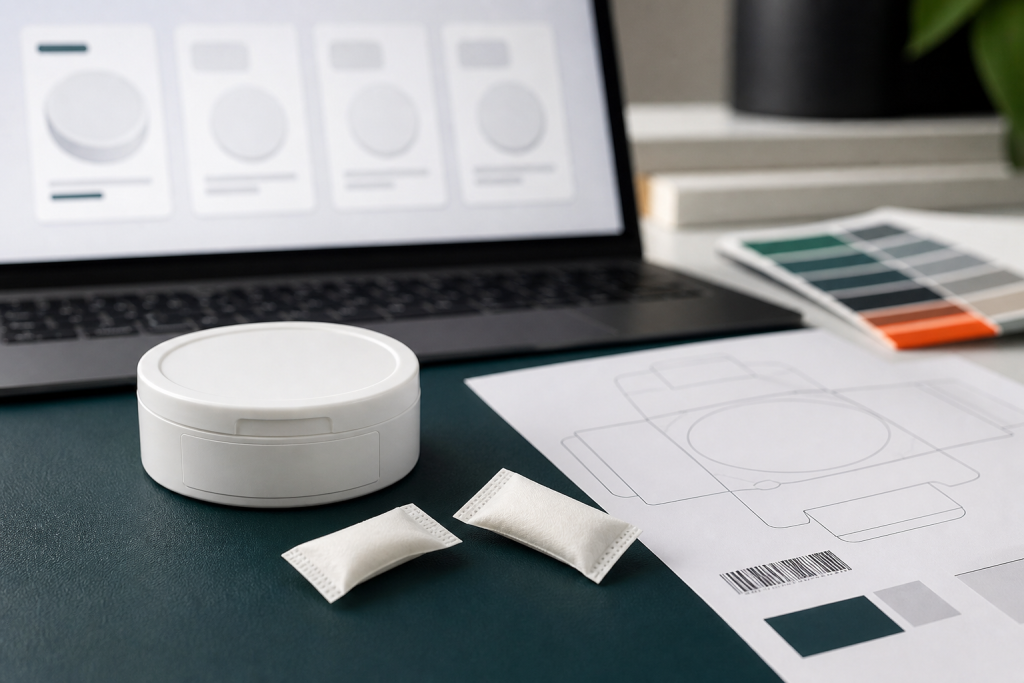
Quick answer: A compliant product page should match the physical label and clearly state what the product is, what one pouch contains, caffeine from all sources, serving directions, warnings, pouch count, net quantity, storage, responsible-use information and seller identity. Avoid disease, ADHD, IQ or guaranteed-performance claims.
Make product identity unmistakable
State that the item is a nicotine-free, tobacco-free functional or nootropic oral pouch when that description is accurate. Do not borrow nicotine-pouch warnings selectively while using imagery or language that leaves shoppers unsure whether nicotine is present. Product category treatment still requires market-specific review.
Match the web page to the approved label
Ingredient names, amounts, serving size, count, flavor, caffeine statement, warnings and responsible person or business information should not conflict across the product page, images, FAQ, marketplace listing and can. Version control is important when a formula or label changes.
Control claims in every page element
Claims can appear in titles, comparison tables, alt text, testimonials, badges, image text, metadata and influencer copy—not only the main description. Avoid diagnosing, treating, curing or preventing disease, including ADHD claims, and avoid promises to increase IQ or guarantee reaction time or productivity.
Ingredient evidence does not automatically substantiate the finished pouch, dose, population or delivery claim. Record the evidence and legal review behind each approved statement.
Do not overlook ecommerce mechanics
Subscription selectors, quantity discounts and bundles should not encourage use above labeled limits. Age gates may be chosen as a responsible brand policy even when a market does not classify the nicotine-free product as tobacco. Shipping restrictions, returns, adverse-event contact and privacy terms should be consistent and accessible.
Practical checklist
- Show nicotine-free and tobacco-free identity clearly where accurate.
- Display ingredient amounts per pouch and caffeine from every source.
- Keep web copy, product images and the current physical label synchronized.
- Review titles, metadata, testimonials and image text for prohibited claims.
- Provide warnings, directions, storage, disposal and a contact route.
- Repeat the audit for each country, marketplace and language version.
Frequently asked questions
Can a product page say a nootropic pouch treats ADHD?
No medical treatment claim should be made without the required authorization and evidence. Use only claims permitted for the actual product and market.
Is a website disclaimer enough to fix an aggressive claim?
No. A disclaimer generally does not neutralize a contradictory disease or guaranteed-performance claim.
Should product photos show the full label?
Images should be current and legible enough not to mislead, but required information should also be accessible as webpage text where appropriate.
Related nootropic pouch resources
Read our usage guide, safety overview, packaging guide and OEM inquiry page.
Reviewed 28 August 2026. General educational and B2B information only; not medical or legal advice.
Buyer decision summary
Use this page as a decision framework, not as a substitute for a signed product specification or market-specific review. A credible nootropic pouch project identifies the finished product category, the amount of every active per pouch, total caffeine from all sources, intended adult use, packaging configuration and target jurisdiction. Commercial figures such as MOQ and lead time should be tied to the actual formula, flavor, strength and artwork version. Before approval, compare a production-equivalent sample with measurable acceptance criteria and assign responsibility for claims, labels, release testing and later changes. This prevents a general marketing statement from being mistaken for a guaranteed specification and gives procurement, formulation, quality and regulatory teams the same reference point.
Key parameters to confirm
- Target jurisdiction: Classify the finished product before finalizing formula, claims, directions or artwork.
- Label owner: Assign approval of mandatory copy, warnings, responsible-business details and translations.
- Claims boundary: Avoid disease, ADHD, IQ, cure or guaranteed-performance language unless specifically permitted and substantiated.
- Change control: Re-review after ingredient, dose, supplier, serving, market or packaging changes.
Continue this topic
- Nootropic Pouch Regulations and Labeling: Questions to Ask Before Launch
- Nootropic Pouch FDA Label Claims: Focus Support Without Medical Language
Content status: Reviewed 13 September 2026. General B2B information; project-specific commercial, technical and regulatory details require written confirmation.